
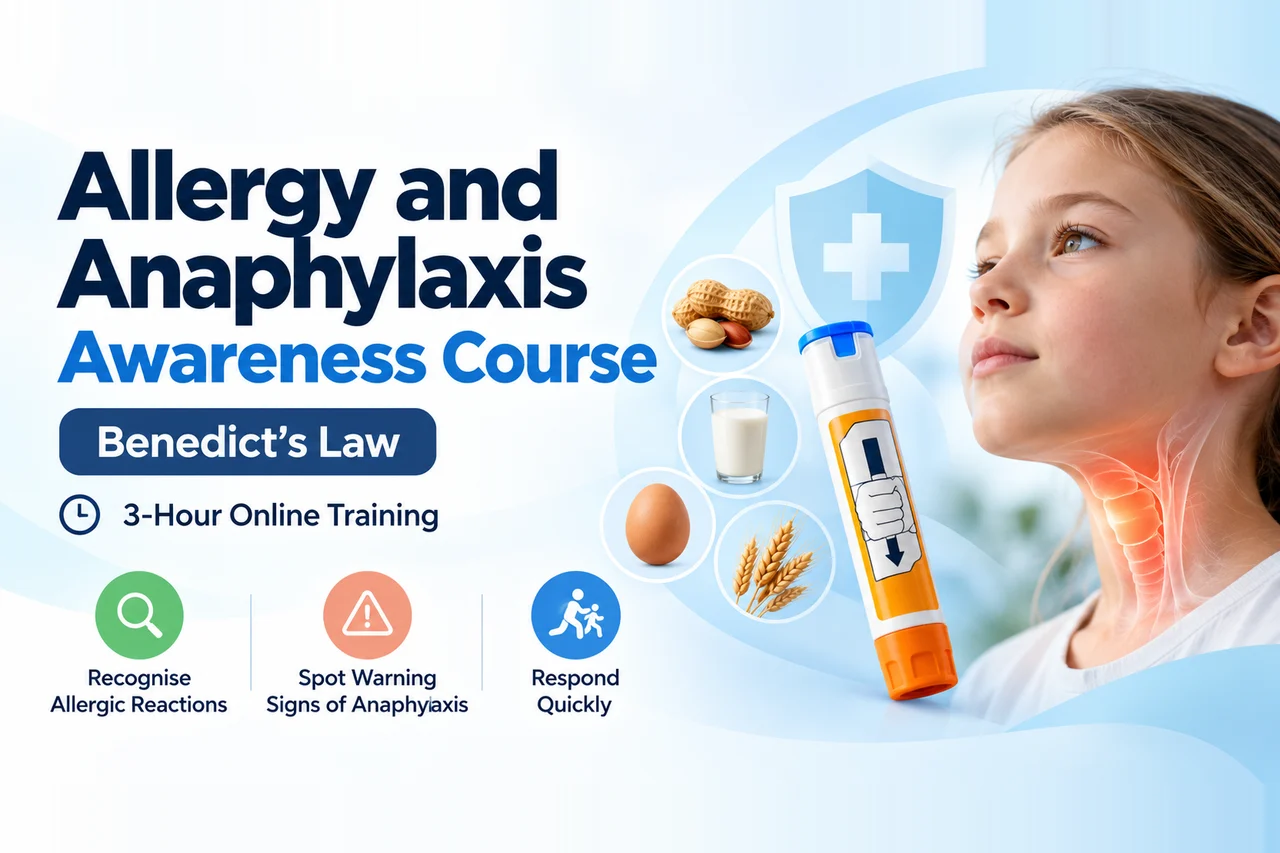
Take a flexible 3-hour online training to understand allergies, severe reactions, and anaphylaxis.
You will learn about common allergens, allergic reactions, warning signs of anaphylaxis, and the need for quick, proper responses. This course is for individuals and organisations that want to improve allergy awareness in workplaces, schools, childcare, hospitality, and community groups.
Finish the course online in 3 hours, or schedule group training on-site for £400 for up to 12 people.
Allergic reactions can range from mild to severe. Knowing what signs to watch for can help people react better when someone gets sick from an allergen.
Allergy awareness is key in places where staff care for others, like colleagues, customers, children, or visitors. Knowing common triggers, spotting early warning signs, and communicating clearly helps make safer decisions before problems get worse.
Anaphylaxis is a serious allergic reaction that can happen quickly and needs immediate attention. Training helps people spot signs of anaphylaxis, understand the importance of quick action, and know when to get medical help instead of trying to diagnose it themselves.
Allergies happen when the immune system reacts to something that is usually harmless. These things are called allergens and can include certain foods, medicines, insect stings, latex, and other environmental triggers.
It’s important to understand the difference between a mild allergic reaction and a severe, life-threatening reaction as part of allergy and anaphylaxis training.
Allergic reactions can impact various body parts and often happen quickly after contact with an allergen. Symptoms differ among people and may include itching, rashes, swelling, sneezing, stomach pain, or other changes.
Not all allergic reactions are serious, but it’s important to notice unusual symptoms and address concerns. This helps ensure the right actions are taken and communication is effective.
An allergic reaction can turn into an emergency when symptoms are severe, worsen quickly, or affect breathing, blood flow, or how alert a person is.
Anaphylaxis is a serious allergic reaction that needs immediate medical help. Awareness training aims to help people recognise warning signs, understand the need for quick action, and follow the right emergency procedures.
This 3-hour course teaches important information about allergies. You will learn to recognise symptoms and respond effectively in everyday situations. The course is practical and relevant to places where people might face known or unexpected allergens.
During the course, learners will cover these main topics:
Allergy risks can appear in various places. This course teaches awareness that applies to workplaces, schools, nurseries, childcare settings, hospitality businesses, and community organisations.
Learners will explore how people come into contact with allergens, how to share information about them, and why it’s important for staff to be aware. This awareness helps ensure consistent responses when someone has a known allergy or shows worrying symptoms. The goal is to build practical understanding without replacing specific job procedures, medical advice, or clinical training.
Recognising signs of anaphylaxis is crucial for allergy awareness. Symptoms can differ from person to person and can appear rapidly. It’s important for learners to know what changes might show that a reaction is getting worse.
Signs of a serious problem can include trouble breathing, wheezing, swelling in the tongue or throat, changes in voice, ongoing coughing, dizziness, fainting, or being less responsive. A person might also have skin changes like hives, redness, or swelling, but sometimes severe reactions happen without visible skin symptoms.
The course teaches learners why it’s important to take combinations of symptoms and quick changes seriously.
The goal is not to diagnose anaphylaxis but to spot when symptoms might be getting worse and when urgent help is needed. It’s important to communicate clearly, follow the person’s emergency plan if they have one, and call emergency services if a serious reaction is suspected.
Raising this awareness helps staff and individuals respond quickly and avoid delays when a situation needs urgent attention.
When anaphylaxis is suspected, it is crucial to recognise that it could be a medical emergency and act quickly. Awareness training teaches learners to follow emergency procedures, communicate clearly, and get the right medical help.
A good response includes calling emergency services, following the person’s allergy or emergency plan if there is one, and staying with them while help arrives.
The course teaches learners when to escalate a situation and why it’s important to respond calmly and in an organised way. It does not replace medical advice, clinical training, or specific emergency procedures from organisations.
Some people at risk of severe allergic reactions may carry an adrenaline auto-injector prescribed by a doctor. This course teaches learners how these devices can help in emergencies and why it’s important to follow the person’s plan, instructions, and relevant workplace rules.
This course provides basic awareness. Completing it does not prove clinical skills or replace hands-on training that is needed for specific roles.
Benedict’s Law aims to improve allergy safety in schools, thanks to efforts from the family of Benedict Blythe and other advocates. Their campaign has raised awareness about the need for staff training, clear allergy policies, emergency plans, and proper support for students with allergies.
Benedict’s Law refers to allergy-safety reforms in schools in England. These reforms are now part of the Children’s Wellbeing and Schools Act 2026, not a separate law. The Act outlines new allergy-safety duties for schools, while guidance from the Department for Education explains how schools should help students with allergies.
Starting from 1 September 2026, schools must follow new rules on allergy safety policies, staff training on allergies, Individual Healthcare Plans when needed, and having spare adrenaline auto-injectors. These rules apply specifically to education and are not intended as a general legal requirement for all workplaces in the UK.
Schools have specific legal duties, but knowing about allergies is important in childcare, hospitality, workplaces, and community groups too. Staff who understand allergy risks can spot symptoms, share important information, and follow the right procedures.
For organisations not covered by school rules, allergy awareness training is a smart way to manage risks effectively. This training should support, not replace, legal requirements, individual allergy plans, workplace procedures, or medical advice.
Allergy and anaphylaxis training is important for anyone who needs to spot an allergic reaction, understand the risks, and help when someone is sick. This course is good for both individuals and organisations that want to learn practical awareness.
Teachers, nursery staff, childminders, and childcare professionals care for children with allergies. They may need to act quickly if allergy symptoms arise unexpectedly.
Training helps staff learn about common allergens and recognise warning signs. It teaches them how to share important information clearly and follow their setting’s procedures. This training also raises allergy awareness among teams working with children and young people.
Allergy awareness is important in restaurants, catering, workplaces, and community groups that interact with employees and the public.
For staff and managers, knowing allergy risks helps them communicate clearly, make better decisions, and respond consistently when issues come up.
This course is great for anyone who wants to understand allergies and anaphylaxis better.
Parents, caregivers, volunteers, and the public can use this training to learn about common triggers, symptoms, and what to do if a severe reaction occurs.
Training 22’s Allergy and Anaphylaxis Awareness Course is available online, making it easy for learners to gain important knowledge without going to a classroom.
The course lasts 3 hours and teaches about allergies, severe reactions, recognising anaphylaxis, and how to respond in emergencies.
The online format makes the course ideal for busy people, staff, and organisations needing easy access to allergy training. Learners can finish the 3-hour course in a way that fits their work, study, or personal commitments, making it a practical choice for personal growth and staff awareness.
Online delivery eliminates the need to travel to training locations, making the course more accessible to learners throughout the UK.
The content is organised for easy learning, helping participants understand allergy risks, recognise warning signs, and respond effectively to concerns.
For organisations that prefer in-person group learning, Training 22 offers on-site Allergy and Anaphylaxis Awareness training. This option helps staff come together to understand allergy risks, warning signs, and how to respond in emergencies.
On-site delivery is available for groups of up to 12 learners. This is a good option for schools, nurseries, childcare centres, hospitality teams, workplaces, and community organisations.
Training a team together can help everyone become more aware of allergens, improve communication, recognise signs of anaphylaxis, and follow the right procedures for your organisation.
On-site Training Overview:
Training 22 provides on-site courses at a set group rate. The price is £400 for up to 12 learners. This option lets organisations set up allergy and anaphylaxis awareness training directly for their team, so individual staff members don’t have to go to a different location.
Allergy awareness is not just about spotting emergencies. It also involves understanding daily risks, communicating clearly, and knowing when to take concerns seriously.
This course helps learners use their knowledge in real-life situations without causing unnecessary fear or going beyond basic awareness training.
Learners can gain a better understanding of common allergens, exposure risks, and the importance of sharing accurate information. This helps improve daily communication among colleagues, parents, caregivers, staff, customers, and others who need to know about a person’s allergy needs or organisational procedures.
Awareness training helps people feel ready when someone mentions symptoms or a possible allergic reaction.
By learning warning signs, procedures to follow, and the importance of quick communication, participants can respond more effectively. The goal is to enhance preparedness and decision-making, not to ensure specific outcomes or replace medical advice, emergency services, or specialised training.
Training 22’s Allergy and Anaphylaxis Awareness Course aims to simplify this important topic for everyday use. It emphasises practical awareness, clear explanations, and helps learners identify when to take further action regarding allergy issues.
The course covers allergies, allergic reactions, and anaphylaxis in easy-to-understand language, making it good for all learners.
Instead of using complicated medical terms, the training emphasises recognising risks, understanding warning signs, communicating clearly, and knowing when to escalate a situation.
People can take the 3-hour allergy awareness course online, making it easy to learn from anywhere.
Organisations can also organise on-site group training for up to 12 people for £400. This option helps schools, childcare centres, hospitality businesses, and workplaces build a common understanding of allergies and anaphylaxis.
Enhance your knowledge of allergies, allergic reactions, and anaphylaxis with Training 22’s 3-hour online course. This training is great for individuals wanting to learn more or for organisations aiming to boost staff awareness of allergy risks and emergency responses.
You can take the course online from anywhere or arrange on-site group training for £400 for up to 12 people.
Whether you’re learning on your own or planning training for a team, the course offers a clear introduction to recognising allergy issues, understanding anaphylaxis, and knowing how to respond in emergencies.
Common questions about course content, delivery, duration and allergy-safety responsibilities
An allergy and anaphylaxis awareness course teaches learners about common allergens, allergic reactions, signs of anaphylaxis, and how to respond in an emergency. This training focuses on awareness, not on clinical or medical qualifications.
Benedict’s Law comes from efforts by Benedict Blythe’s family and allergy groups to improve safety for those with allergies. In England, the Children’s Wellbeing and Schools Act 2026 and guidance from the Department for Education now support these allergy-safety rules in schools.
There is no UK law called “Benedict’s Law.” However, the Children’s Wellbeing and Schools Act 2026 established allergy-safety rules for some schools in England. These rules are backed by guidance from the Department for Education and apply specifically to education. They are not a general legal training requirement for all UK organisations.
The Training 22 Allergy and Anaphylaxis Awareness Course lasts 3 hours.
Yes. The course is mostly online, making it perfect for people who want to learn about allergies and anaphylaxis without going to a classroom.
This course is for teachers, school staff, childcare workers, childminders, hospitality staff, employers, teams, community groups, caregivers, and anyone who wants to learn more about allergies and anaphylaxis.
Yes. The course teaches you how to recognise signs of anaphylaxis, understand how a severe allergic reaction can worsen, and why quick action is essential.
Adrenaline auto-injector awareness can be included in the course. This part will explain how prescribed auto-injectors work in emergencies. It does not mean that you will be clinically trained or that it replaces any hands-on training needed for specific roles.
Yes, Training 22 can provide Allergy and Anaphylaxis Awareness training on-site for groups of up to 12 people.
On-site training costs £400 for up to 12 learners. Organisations can contact Training 22 to set up group sessions for their team.
£35.00
We use cookies to improve your experience on our site. By using our site, you consent to cookies.
Manage your cookie preferences below:
Essential cookies enable basic functions and are necessary for the proper function of the website.
You can find more information in our Cookie Policy and .

Reviews
There are no reviews yet.