Paediatric First Aid Course in London
(Blended Course: 1 Day E-Learning + 1 Day Classroom Training)
Life-saving emergency first aid training for babies and children
The Full Paediatric First Aid Course in London provides comprehensive training for people who care for babies and children, including early years practitioners, nursery staff, childminders, nannies, teachers, parents and carers.
This is a blended learning course completed in two parts: one day of e-learning and one day of face-to-face classroom training. The online component develops the essential knowledge behind paediatric first aid, while the classroom day focuses on practical skills, demonstrations, scenarios and competency assessment.
Learners develop the skills needed to respond to emergencies involving infants and children, including CPR, choking, unresponsiveness, bleeding, burns, allergic reactions, seizures and other childhood injuries and medical emergencies.
The face-to-face classroom component gives learners the opportunity to practise essential techniques using appropriate training equipment and receive guidance from an experienced instructor.
Whether you are completing paediatric first aid training for an early years role, your organisation or your own knowledge, the blended format combines flexible online learning with essential hands-on practical training.
Book your classroom training date and complete both parts of the blended course to gain your Full Paediatric First Aid certificate.
Full Paediatric First Aid Course at a Glance
| Course Detail |
Information |
| Course Format |
Blended Learning |
| E-Learning |
1 Day |
| Classroom Training |
1 Day Face-to-Face |
| Total Course |
2-Part Blended Course |
| Practical Training |
Included during the classroom day |
| Assessment |
Practical competency assessment plus any required online assessment |
| Certificate Validity |
3 Years |
| Location |
London |
| Suitable For |
Early years staff, childcare professionals, parents and carers |
Why Paediatric First Aid Training Is Essential for Child Safety
When a baby or child becomes seriously ill or injured, knowing how to respond appropriately can make an important difference while professional medical help is being arranged. Paediatric first aid training gives parents, carers and childcare professionals the knowledge and practical skills to recognise emergencies, take appropriate first aid action and remain calm under pressure.
Babies and children depend entirely on adults for safety. Parents, childcare workers, teachers, and early years staff are often the first responders in emergencies. Without training, panic can delay important care. With proper paediatric first aid training in London, you learn to respond quickly and effectively, with the knowledge and calmness needed in emergencies.
The Importance of Immediate First Aid Response for Babies and Children
Children’s bodies react faster and can worsen more quickly than adults in emergencies. Issues like airway blockages, breathing problems, severe allergies, or heart issues can become serious in seconds. Quick first aid is crucial to keep a child stable until help arrives.
Paediatric first aid training teaches you to spot danger signs early and respond quickly. You learn how to check a child’s condition, handle life-threatening situations, and provide care until professionals arrive. This training gives parents peace of mind and is vital for childcare workers to protect the children they care for.
Emergencies can happen anywhere at home, in a nursery, school, or childcare setting, often with no warning. Being prepared means you won’t have to guess what to do when immediate action is needed.
Why Paediatric Emergencies Require Specialist First Aid Skills
First aid for babies and children is different from adult first aid. Their bodies and emotional needs are unique, so emergency responses must be adjusted. Techniques like CPR, choking management, and positioning change with a child’s age and size.
Paediatric first aid training covers these differences. You will learn CPR methods for infants and children, how to handle choking based on age, and how to safely manage common childhood emergencies. The course also teaches how to keep a child calm and secure during stressful times, alongside physical care.
Special training for childcare professionals ensures they meet safety standards and care duties. For parents and guardians, it offers peace of mind, knowing you can protect your child in emergencies.
Paediatric first aid training is not about fear; it’s about being ready, responsible, and able to act quickly when a child’s safety is at stake.
What Is a Full Paediatric First Aid Course?
The Full Paediatric First Aid Course teaches learners how to recognise and respond to a wide range of emergencies involving babies and children. It is particularly relevant to people working in early years and childcare settings, as well as parents and carers who want comprehensive paediatric first aid knowledge.
Training 22 delivers this Full Paediatric First Aid Course through blended learning: one day of e-learning combined with one day of face-to-face classroom training. The e-learning component covers essential knowledge, while the classroom component provides practical instruction, skills practice and competency assessment.
Full Paediatric First Aid Training and EYFS Requirements
For early years providers in England, paediatric first aid arrangements form part of the Early Years Foundation Stage (EYFS) safeguarding and welfare requirements.
The criteria in Annex A of the EYFS state that a Full Paediatric First Aid course should provide a minimum of 12 hours of training, excluding breaks. The emergency paediatric first aid elements must be delivered face-to-face, allowing learners to practise and demonstrate essential practical techniques.
Training 22’s blended Full Paediatric First Aid Course combines e-learning with a face-to-face classroom training day so learners can develop both theoretical knowledge and practical emergency-response skills.
The course covers areas such as infant and child CPR, choking, unresponsiveness, bleeding and shock, burns and scalds, fractures, head injuries, allergic reactions, anaphylaxis, asthma, seizures and other childhood emergencies.
How This Course Prepares You for Real-Life Child Emergencies
This course focuses on real-life situations instead of just theory. You will learn to quickly assess situations, make safe decisions under pressure, and take action while waiting for help. Training emphasises hands-on practise, where you will learn techniques like CPR, choking management, and caring for injured individuals in a supportive setting.
By simulating real child emergencies, the course helps you feel more confident. You will understand what to do, when to do it, and how to stay safe. This practical method is especially useful for parents and childcare workers who might be the first responders in an emergency.
The Paediatric First Aid Course builds confidence by emphasising skills, clarity, and readiness. It ensures that in a child emergency, you rely on proven skills and clear procedures, not guesswork.
Who This Paediatric First Aid Course Is Designed For
The Paediatric First Aid Course is for anyone caring for babies and young children. It teaches essential life-saving skills for both childcare jobs and home situations, helping everyone gain useful knowledge and confidence.
Whether you work with young children, care for them professionally, or want to keep your family safe, this paediatric first aid training in London provides practical practise and expert guidance.
Childcare Professionals and Early Years Staff
This course is important for anyone working in childcare and early years settings, where safety and readiness for emergencies are key responsibilities. It’s ideal for nursery staff, preschool workers, teaching assistants, early years educators, nannies, childminders, and foster carers.
Paediatric first aid training helps staff ensure safety every day and respond correctly to incidents involving infants and children. It also meets workplace training needs and complies with Ofsted and EYFS standards. By taking this course, childcare professionals build confidence to handle emergencies, protect children, and fulfil their responsibilities.
Parents, Guardians, and Family Carers
Parents and family caregivers are usually the first to help when a child is sick or hurt. This course is perfect for parents, guardians, grandparents, and au pairs who want to feel ready for emergencies with babies and young kids.
Paediatric first aid training gives families useful skills they can apply at home or in the community. Learning how to respond to choking, sudden illness, or accidents can stop serious situations from getting worse. This training helps you feel confident that you can care for the children you love when it really counts.
Schools, Nurseries, and Childminding Settings
The Paediatric First Aid Course is important for schools, nurseries, and childminding settings in London and Greater London. It helps train staff and gives them reliable skills for emergencies.
Training 22 can also arrange the classroom component of the blended Full Paediatric First Aid Course for groups and organisations. This can help nurseries, schools, childminding organisations and other childcare providers arrange practical training for multiple members of staff while maintaining the required blended course structure.
The course is designed for everyone, from parents to childcare teams, ensuring they all gain the necessary skills to handle paediatric emergencies effectively.
What You Will Learn on the Paediatric First Aid Course
The course content is delivered across the e-learning component and the face-to-face classroom component. Online learning supports the knowledge-based elements of the course, while essential emergency first aid skills are taught, practised and assessed during the classroom training day.
The Paediatric First Aid Course helps you learn practical skills to handle emergencies with babies and young children. You will focus on the most common and serious situations, so you’ll know how to act quickly.
With guided instruction and hands-on practise, you will learn how to assess emergencies, stay calm, and provide effective first aid until help arrives.
Emergency First Aid Skills for Babies and Young Children
This part of the course focuses on emergencies that could be life-threatening and need quick action. You will learn techniques suitable for infants and children based on their physical and medical needs.
You will be trained in:
- Infant and child CPR techniques, including rescue breaths and chest compressions.
- Managing choking incidents for babies and young children.
- Recognising and responding to breathing difficulties and respiratory emergencies.
- Dealing with unconscious casualties safely and correctly.
- Understanding when and how to call emergency services.
- Using safe casualty positioning to protect airways and prevent further harm.
You will learn emergency response skills through hands-on demonstrations and guided practise. This will help you build muscle memory and gain confidence in stressful situations.
Managing Common Childhood Injuries and Medical Conditions
Children are naturally active and curious, which can lead to both minor and serious injuries at home and in childcare. This section of the Paediatric First Aid Course teaches you how to handle various urgent but non-life-threatening situations safely.
You will learn how to respond appropriately to a range of childhood injuries and medical emergencies, including:
- Severe and minor bleeding and the effects of shock
- Burns and scalds
- Suspected fractures
- Head, neck and back injuries
- Electric shock
- Suspected poisoning
- Foreign objects in the eyes, ears or nose
- Eye injuries
- Bites and stings
- The effects of extreme heat and cold
- Anaphylaxis and other allergic reactions
- Asthma attacks and breathing difficulties
- Seizures and febrile convulsions
- Diabetic emergencies
- Signs associated with meningitis
- Other relevant childhood illnesses and emergencies
Learners also develop an understanding of the responsibilities of a paediatric first aider, including appropriate first aid provision and the importance of recording accidents and incidents correctly.
What Happens During the Classroom Training Day
The face-to-face classroom day is the practical component of Training 22’s blended Full Paediatric First Aid Course. It gives learners the opportunity to practise essential paediatric first aid techniques under instructor guidance and demonstrate the practical skills required during assessment.
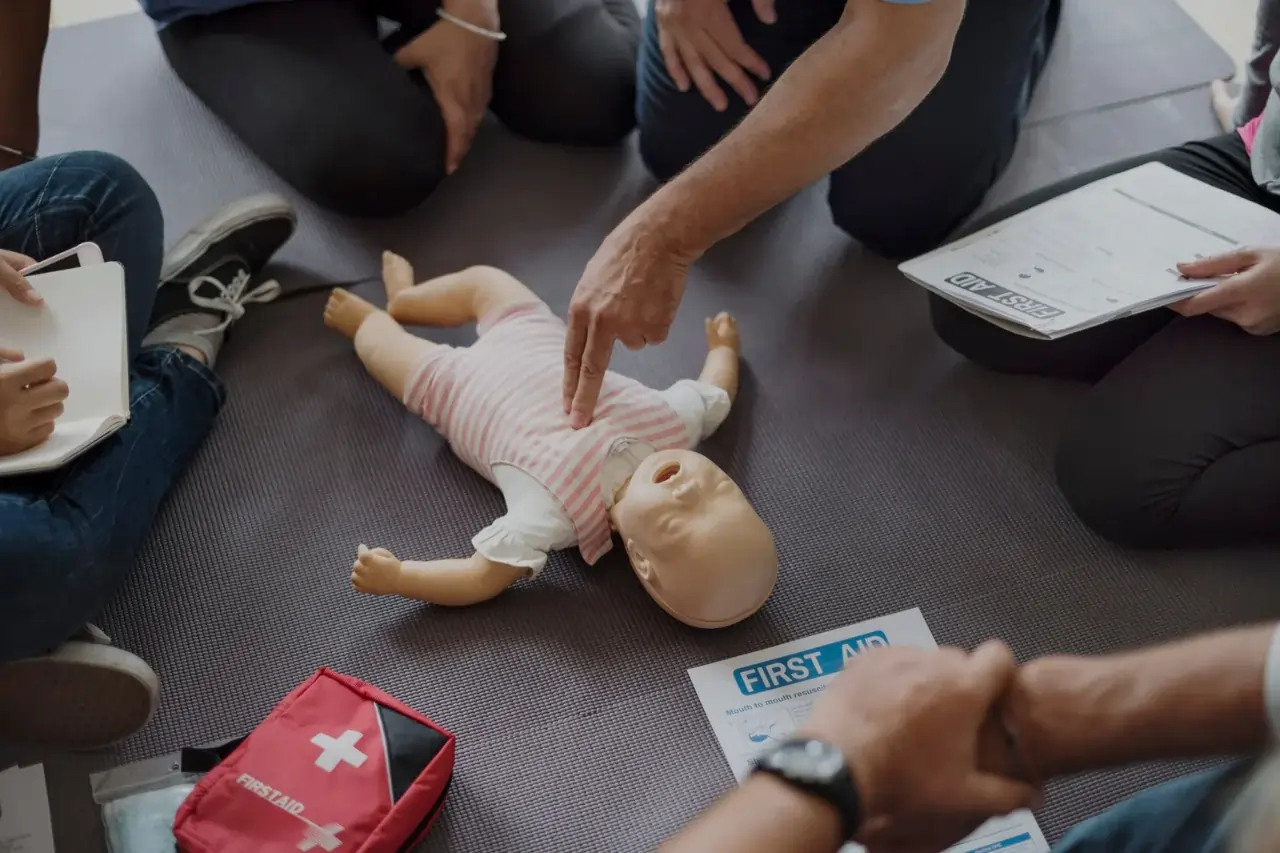
During the classroom session, learners work with appropriate paediatric first aid training equipment and take part in demonstrations, skills practice and emergency scenarios involving babies and children.
The practical environment allows learners to ask questions, receive feedback and develop confidence in applying first aid techniques correctly.
Practising Infant and Child CPR During Classroom Training
Participants get thorough training in infant and child CPR with professional manikins. This hands-on method lets you practise hand placement, compression depth, breathing techniques, and rhythm safely.
You will practise:
- Infant CPR techniques suitable for babies under one year.
- Child CPR techniques appropriate for children.
- Safe airway management and rescue breathing.
- Correct responses to breathing and cardiac emergencies.
Practising repeatedly builds muscle memory, making techniques feel natural and confident during emergencies. Instructors give clear feedback and support, helping you improve your skills and ask questions without feeling pressured.
Realistic Emergency Scenarios and Confidence-Building Exercises
The course offers realistic emergency scenarios that parents and childcare professionals often encounter. These scenarios help you practise techniques and apply them in stressful situations.
You will take part in guided exercises covering:
- Choking incidents involving babies and children.
- Managing unconscious casualties safely.
- Responding to sudden illness or allergic reactions.
- Dealing with accidents such as burns, bleeding, or head injuries.
These exercises help you reduce panic and hesitation. They teach you to think clearly and act quickly. Practising in real situations builds your confidence to stay calm and follow the right steps to keep a child safe until help arrives.
Hands-on paediatric first aid training prepares you to act when it counts. You’ll leave the course informed and ready for emergencies.
Course Duration, Learning Format and Certification
The Full Paediatric First Aid Course is delivered as a blended learning programme consisting of one day of e-learning and one day of face-to-face classroom training.
Both components form part of the complete course. The online learning provides essential knowledge and prepares learners for the practical component, while the classroom day focuses on hands-on first aid skills, emergency scenarios and competency assessment.
How the Blended Paediatric First Aid Course Works
Part 1 – E-Learning
Complete one day of online learning covering the knowledge-based elements of Full Paediatric First Aid. The e-learning component allows learners to work through essential course content online as part of the complete programme.
Part 2 – Face-to-Face Classroom Training
Attend one day of classroom-based practical training in London. During this component, learners practise and demonstrate essential emergency paediatric first aid skills under instructor guidance.
Practical topics include responding to an unresponsive baby or child, infant and child CPR, choking, bleeding, shock and other emergency first aid situations.
Important Course Completion Information
This is not a one-day classroom-only course. The Full Paediatric First Aid programme consists of both the e-learning component and the classroom training component.
Learners must successfully complete the required components and assessments before the Full Paediatric First Aid certificate can be issued.
Paediatric First Aid Certificate Validity and Recognition
Learners who successfully complete the required e-learning, face-to-face training and course assessments receive a Full Paediatric First Aid certificate.
Under the EYFS criteria for effective Paediatric First Aid training, PFA certificates are renewed every three years.
For learners working within early years provision, employers should ensure that the course completed is appropriate to their role and consistent with the relevant current EYFS requirements.
The certificate provides evidence that the learner has completed the required training and demonstrated the assessed paediatric first aid competencies covered by the course.
Ofsted, EYFS and UK Paediatric First Aid Compliance
Early years providers in England must follow the paediatric first aid requirements set out in the Early Years Foundation Stage (EYFS) statutory framework where the framework applies to their provision.
For group and school-based early years providers, the EYFS requires appropriate paediatric first aid arrangements, including access to staff holding current PFA certification. The framework also sets criteria for effective Full Paediatric First Aid training in Annex A.
Training 22’s Full Paediatric First Aid Course is intended for learners who need comprehensive training in paediatric emergency response, including those working in nurseries, childcare and early years environments.
How Full Paediatric First Aid Training Supports EYFS Requirements
The EYFS criteria for effective Full Paediatric First Aid training require a minimum of 12 hours of training, excluding breaks, and specify that the emergency paediatric first aid elements are delivered face-to-face.
These face-to-face elements include assessing an emergency, responding to an unresponsive baby or child, CPR-related response, seizures, choking, bleeding and hypovolaemic shock.
A blended course can therefore combine online learning with classroom learning, provided the programme satisfies the applicable criteria and the required emergency elements are completed face-to-face.
Training 22 uses a blended structure combining e-learning with a practical classroom training day to develop both first aid knowledge and hands-on skills.
Supporting Early Years First Aid Arrangements and Inspection Readiness
For early years providers, maintaining appropriate paediatric first aid arrangements forms part of wider safeguarding and welfare responsibilities.
Having appropriately trained staff with current PFA certificates can help a setting demonstrate that it has considered emergency preparedness and the first aid requirements relevant to its provision.
However, completing a training course is only one part of a provider’s wider responsibilities. Settings remain responsible for ensuring that staffing, certificate coverage, policies, procedures and day-to-day practice meet the current requirements applying to their provision.
Training 22 provides Full Paediatric First Aid training to help learners develop the knowledge and practical competencies needed to respond appropriately to emergencies involving babies and children.
Why Choose Training 22 for Paediatric First Aid Training
Choosing a good training provider is crucial for keeping babies and children safe. Training 22 focuses on providing high-quality and practical paediatric first aid training. We aim to give learners real skills, not just certificates. Our method relies on professional standards, clear instructions, and building confidence.
As a trusted paediatric first aid training provider in London, we collaborate with parents, childcare workers, nurseries, schools, and organisations. Our training truly prepares people for emergencies.
Experienced Instructors and Professional Training Standards
All paediatric first aid courses from Training 22 are taught by experienced instructors. Our trainers have strong backgrounds in first aid and emergency response. They know the challenges of childcare and family situations, so they provide training that is practical and easy to use.
Our instructors focus on:
- Clear, step-by-step instructions using plain, professional British English.
- Hands-on guidance to build confidence and competence.
- Supportive learning environments where questions are encouraged.
- Practical techniques aligned with UK first aid and childcare standards.
The training meets high professional standards, making sure learners finish the course ready to handle paediatric emergencies calmly and correctly. This dedication to quality builds trust in the skills they learn and prepares them to use those skills when it counts.
Trusted Paediatric First Aid Training Provider in London
Training 22 provides practical Full Paediatric First Aid training for individuals and organisations across London and Greater London.
The Full Paediatric First Aid Course is delivered through a blended format, combining one day of e-learning with one day of face-to-face classroom training.
Individual learners can book an available classroom training date, while organisations can enquire about suitable arrangements for delivering the classroom component to groups of staff.
This approach combines flexible online study with essential face-to-face skills practice, allowing learners to develop both knowledge and practical confidence.
Benefits of Paediatric First Aid Certification
Paediatric first aid certification offers more than just a certificate. It teaches useful life-saving skills, builds confidence in emergencies, and shows that you care for kids responsibly. Whether you’re a parent or work with children, the benefits go beyond just meeting requirements; they help you feel confident and ready for any situation.
This certification helps create safer spaces for children and allows adults to respond calmly and effectively in critical moments.
Protecting Children in Your Care With Recognised First Aid Skills
The main benefit of paediatric first aid certification is the ability to protect children in emergencies. Trained people can spot dangers quickly, respond properly, and lower the risk of serious injury while waiting for medical help.
Certified learners gain:
- Confidence to act quickly in emergency situations involving babies and children.
- Practical skills to manage life-threatening incidents such as choking or cardiac arrest.
- Knowledge to provide appropriate care for injuries and sudden illness.
- Reassurance for parents, guardians, and families that children are in safe hands.
Parents and caregivers gain peace of mind from paediatric first aid certification. For childcare providers, it builds trust with families by showing a strong commitment to keeping children safe.
Career, Compliance, and Confidence Benefits for Professionals
Paediatric first aid certification is important for many people working in early years and childcare environments. Depending on the setting, role and applicable EYFS requirements, staff may need current paediatric first aid training to support staffing arrangements and first aid provision.
Completing Full Paediatric First Aid training can also help professionals develop practical emergency-response skills and demonstrate their commitment to maintaining children’s safety.
Professional benefits include:
- Supporting compliance with early years and childcare regulations.
- Enhancing employability within childcare and education roles.
- Building confidence to manage emergencies calmly and competently.
- Contributing to safer working environments for staff and children.
- Demonstrating a proactive approach to duty of care and safeguarding.
Paediatric first aid certification does more than meet formal requirements; it boosts professionals’ confidence. Knowing how to act in stressful situations lowers doubt, aids teamwork, and ensures children get fast and effective care when they need it.
This focus on results makes paediatric first aid certification a smart investment in child safety, professional confidence, and peace of mind.
Paediatric First Aid Training for Childcare and Early Years Settings
Childcare and early years settings must be well-prepared for health and safety. Paediatric first aid training is essential for keeping children safe, boosting staff confidence, and meeting legal requirements in nurseries, preschools, schools, and childcare organisations.
Training 22 offers practical paediatric first aid courses in London for individuals and teams. Our training helps create safe and ready childcare environments while keeping daily activities running smoothly.
Paediatric First Aid for Nurseries, Preschools, and Schools
Nurseries, preschools, and schools care for children during the day. Trained staff can quickly manage emergencies, making the learning environment safer.
Paediatric first aid training for early years focuses on common problems like choking, falls, allergic reactions, and sudden illness. The course teaches clear emergency steps, proper first aid skills, and good communication during crises.
This training supports childcare providers by:
- Ensuring staff are trained to respond confidently to child emergencies.
- Supporting compliance with early years and safeguarding requirements.
- Demonstrating a strong commitment to child safety for parents and inspectors.
- Reducing risk through prepared and informed staff teams.
Training 22 partners with childcare locations in London and Greater London to provide trustworthy and professional paediatric first aid training that matches everyday childcare duties.
Group Classroom Training for Childcare Organisations
Training 22 can arrange the face-to-face classroom component of the blended Full Paediatric First Aid Course for eligible organisational group bookings.
This can be suitable for nurseries, early years providers and childcare organisations looking to train several members of staff while keeping the same blended course structure.
Learners still complete the required e-learning component as part of the Full Paediatric First Aid Course. The group classroom session then provides the practical instruction, skills practice and assessment required as part of the blended programme.
Organisations can contact Training 22 to discuss classroom arrangements, group numbers and available training dates.
Paediatric First Aid Courses Available Across London
Training 22 offers easy-to-access paediatric first aid courses in London and Greater London. We help parents, childcare workers, and organisations find high-quality training near them. Our local training model makes it convenient and dependable for busy people and childcare centres.
Whether you’re signing up on your own or organising a team training, our London-focused approach encourages good attendance, consistent learning, and local compliance.
Training Locations Across Greater London
You can find paediatric first aid courses in important areas of London and the Greater London region. This local availability helps learners get training without long travel and access professional classrooms and skilled instructors.
Our courses are suitable for learners based in:
- Central London
- North London
- South London
- East London
- West London
- Surrounding Greater London boroughs
Training 22 provides paediatric first aid training throughout London. This helps childcare providers, parents, and professionals who need trustworthy local training that fits their work and family schedules.
Flexible Booking Options for the Blended Course
The Full Paediatric First Aid Course follows the same blended learning structure for learners completing the programme: one day of e-learning plus one day of face-to-face classroom training.
Individual learners can select an available classroom training date in London and complete the accompanying e-learning component as part of their course.
Organisations looking to train multiple staff members can contact Training 22 to discuss suitable group arrangements for the classroom component.
Whichever booking route you choose, both required parts of the blended Full Paediatric First Aid Course must be completed before course completion and certification.
For upcoming classroom dates or group training enquiries, book your course online or contact Training 22.


Nathaniel Todd –
I feel so much more confident knowing I can handle emergencies involving children.
Juliet Rowe –
The trainer’s examples made it easy to connect the theory to real-life situations.
Archie Cole –
I loved how practical the session was, especially the hands-on CPR training for infants.
Rosie Gibson –
This course taught me skills I didn’t even know I needed as a childcare worker.
Eleanor Slater –
The focus on common childhood injuries like cuts and burns was incredibly helpful.
Rory Lawson –
I left the course feeling fully equipped to handle medical emergencies with kids.
Penelope Dean –
The trainer made everything so easy to understand, even the complicated parts.
Nancy Bates –
I now feel confident using an EpiPen and recognising allergic reactions in children.
Leon Murray –
The training was so thorough, and the practical exercises helped me feel prepared.
Eliza Gibson –
This course has given me peace of mind as a parent to young children.
Thea Owen –
The CPR techniques for infants and toddlers were explained so clearly.
Ivy Parsons –
I now know exactly how to handle choking situations with young children.
Theo Cole –
The session was engaging, and I learned so much about paediatric emergencies.
Aurora Sanders –
I feel ready to respond calmly and quickly in any situation involving a child.
Luca Drake –
The trainer’s experience and knowledge really shone through during the course.
Harper Newton –
I appreciated how much time was spent on practical skills like bandaging and CPR.
Anastasia Sanders –
This training gave me the confidence I need to care for children in emergencies.
Jude Hawkins –
Learning about dehydration and how to spot it in kids was so important.
Ada Webb –
The course was very hands-on, which made it easy to remember everything I learned.
Maxwell Hancock –
I feel like I’ve gained life-saving skills that I’ll carry with me forever.
Matilda Newton –
The trainer broke everything down step by step, which made it so easy to follow.
Archie Cole –
I now understand how to handle asthma attacks and allergic reactions in kids.
Freddie Doyle –
The hands-on CPR practice was a highlight for me—it boosted my confidence so much.
Matilda Francis –
The session on head injuries and how to handle them was incredibly informative.
Matilda Cross –
I left feeling empowered to make a difference in a child’s life during emergencies.
Toby Hardy –
The trainer ensured everyone had time to practice each skill, which I really appreciated.
Roman Shepherd –
The focus on real-life scenarios involving children made the course feel very relevant.
Serena May –
I loved how interactive the session was—it kept me engaged the entire time.
Mabel Parsons –
This training made me feel like I could handle any medical emergency involving a child.
Louis Todd –
The course covered everything I was worried about, from choking to burns and more.
Matilda Sanders –
I feel confident now in recognising symptoms of serious conditions in kids.
Juliet Burton –
The trainer’s approach was so encouraging, and it helped me feel less nervous.The trainer’s approach was so encouraging, and it helped me feel less nervous.
Jayden Reed –
The practical focus of the course made it easy to apply what I learned immediately.
Jude Griffin –
I now know how to respond to seizures in children, which I was always scared about.
Zoe Cross –
The hands-on bandaging practice was incredibly useful for treating cuts and wounds.
Imogen Parsons –
This course gave me the tools to act fast and effectively in paediatric emergencies.
Louis Todd –
The trainer was patient and made sure everyone understood the techniques.
Ada Atkinson –
I feel like I can now provide first aid to children confidently and calmly.
Jude Reed –
The session was very practical, and I learned so much in just one day.
Eliza Lambert –
The focus on paediatric-specific emergencies was exactly what I needed for my job.
Caleb Shepherd –
The trainer made the material so easy to understand, even for someone with no prior experience.
Anastasia Dean –
I now feel confident in handling choking incidents, which I used to fear the most.
Violet Dean –
The course taught me how to recognise and treat shock in children, which I found very useful.
Arthur Cole –
The practical CPR training for infants was so helpful and really boosted my confidence.
Felicity May –
I now feel better prepared to care for children in both minor and major emergencies.
Alfie Knight –
This course should be a requirement for anyone working with kids. It’s so important.
Maxwell Reed –
The trainer’s tips for managing stressful situations with kids were incredibly helpful.
Eleanor Burton –
I loved how interactive the course was, with plenty of opportunities to ask questions.
Rosie Cross –
The session made me feel ready to act in a paediatric emergency without hesitation.
Reuben Griffin –
I now know how to handle everything from small injuries to life-threatening situations with kids.
Felicity Bishop –
The course gave me the knowledge and confidence to handle emergencies with children.
Alfie Murray –
I now feel much more prepared to deal with common childhood injuries.
Thea Kirk –
The CPR training for infants and toddlers was incredibly hands-on and easy to follow.
Penelope Bishop –
I never thought I’d feel so calm and confident dealing with a choking child.
Elias Bennett –
The trainer’s real-life examples made it easy to connect the theory to practice.
Anastasia Sanders –
This course made me realise how much I didn’t know about paediatric first aid.
Eloise Jennings –
The practical focus helped me feel ready to act in an emergency situation.
Elliot Hardy –
I now feel confident identifying symptoms of serious conditions in children.
Nancy Burton –
Learning about allergic reactions and how to use an EpiPen was a game-changer for me.
Mabel Francis –
The trainer was fantastic at simplifying even the most complex techniques.
Lydia Kirk –
I left the session knowing I can now handle emergencies involving children.
Francesca Sanders –
The hands-on CPR practice was the most valuable part of the training for me.
Theo Payne –
This course taught me how to act quickly and effectively in a child-focused emergency.
Rosie Bishop –
The trainer ensured everyone was comfortable practicing life-saving techniques.
Poppy Hopkins –
I now feel confident managing everything from cuts to more serious injuries in kids.
Mabel Kirk –
The course covered so many real-life scenarios that I feel ready for anything.
Zachary Hardy –
The trainer made the session interactive and easy to follow, which kept me engaged.
Ada Francis –
I learned how to handle choking and burns in children, which I found incredibly helpful.
Willow May –
The focus on practical skills made the course both enjoyable and informative.
Thea Glover –
I now feel more capable of caring for children in emergencies, whether at home or work.
Eloise Newton –
The session on handling seizures in kids was especially helpful for me.
Felix Jennings –
The trainer was approachable and answered every question I had with patience.
Thea Parsons –
I feel so much better prepared to care for kids after completing this course.
Eleanor Parsons –
The hands-on nature of the course made it easy to retain everything I learned.
Willow Sutton –
I now feel confident using a defibrillator and performing CPR on infants.
Aurora Hopkins –
This training gave me practical tools that I know will be useful in my job as a nanny.
Madeline May –
The trainer provided clear instructions that made the whole session stress-free.
Alfie Mann –
The trainer broke down the techniques so well that even a beginner could follow.
Lydia Webb –
I loved how the course focused on real emergencies that can happen with children.
Anastasia Cross –
I now understand how to manage asthma attacks and allergic reactions in kids.
Mabel Bates –
The course made it easy to learn how to treat both minor and major injuries in children.
Louis Reed –
I feel ready to handle emergencies involving kids thanks to this fantastic training.
Ada Hopkins –
The CPR practice for infants and toddlers was the highlight of the session for me.
Elliot Mann –
I learned so much about first aid for children in just one day. It was incredible.
Penelope Rowe –
The trainer made sure everyone had a chance to practice until they felt confident.
Caleb Hart –
This course should be a must for all childcare workers. It’s so valuable.
Violet Bishop –
The hands-on bandaging practice gave me skills I can use in everyday situations.
Zachary Lawson –
I now know how to identify and respond to dehydration and shock in kids.
Madeline Stevens –
The course gave me the confidence to handle emergencies at my nursery.
Anastasia Francis –
Learning how to manage burns and fractures in kids was incredibly useful.
Zachary Brooks –
The practical examples made it easy to remember what to do in high-pressure situations.
Owen Horton –
I now feel like I can act quickly and effectively during a paediatric emergency.
Mabel Stanley –
The trainer was so knowledgeable and kept the session engaging from start to finish.
Felix Chapman –
The course made everything feel practical and easy to apply in real life.
Luna Barnes –
I now understand how to stay calm and provide care for children in any situation.
Freddie Drake –
The CPR and choking training for infants were skills I know I’ll never forget.
Violet Cross –
The trainer’s encouragement made me feel confident even when I was unsure at first.
Arthur Knight –
This course has made me feel so much more prepared as a parent of young kids.
Elliott Jennings –
I appreciated the focus on common injuries like cuts and falls. It felt very relevant.
Anastasia Thorpe –
The course gave me the tools I need to protect and care for children confidently.