
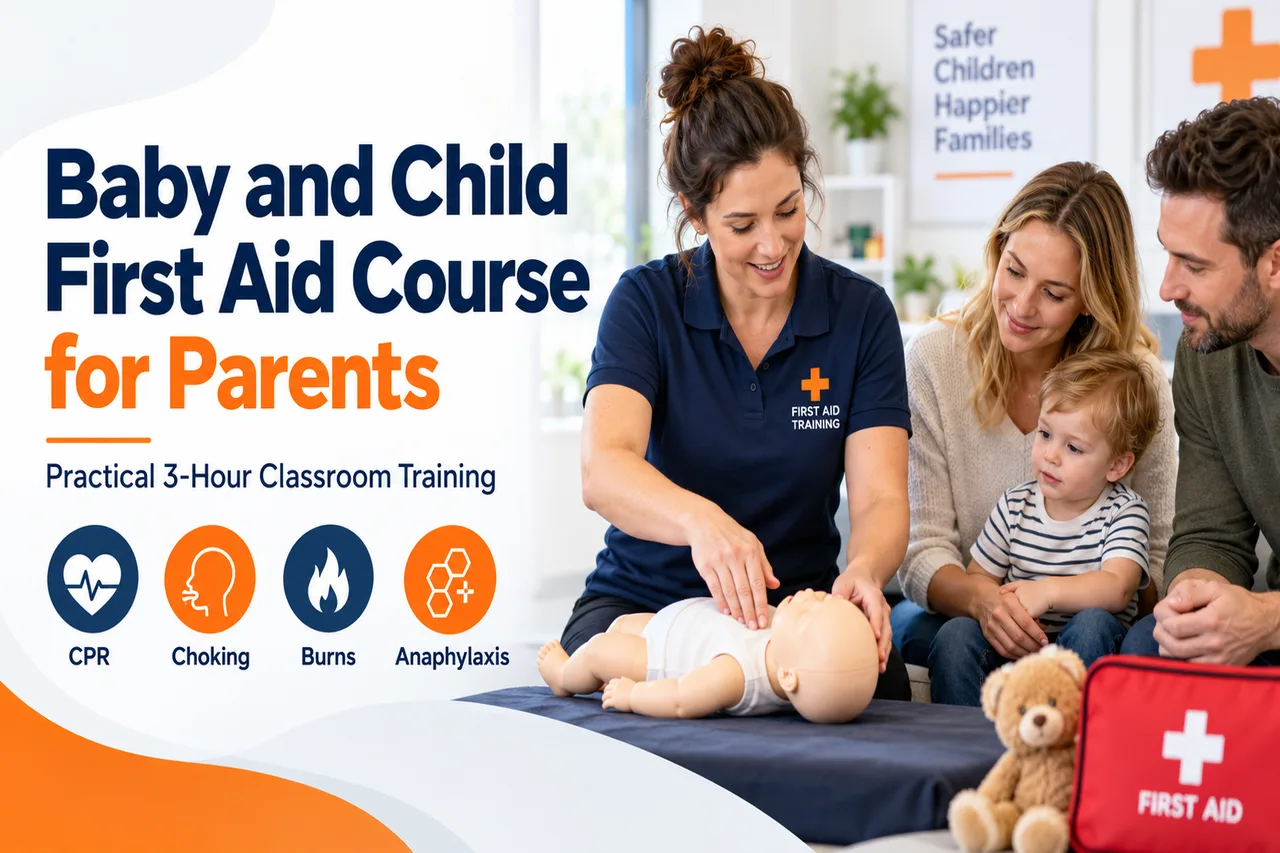
3 Hour Classroom or Online Training
Learn practical first aid skills in a focused 3-hour classroom course for parents and caregivers. Gain confidence in handling common childhood injuries and emergencies, such as CPR, choking, and other key first aid situations.
Parents often take first aid training to feel ready for emergencies. Learning basic first aid helps them stay focused, recognise problems, and take proper action while waiting for professional help.
This baby and child first aid course focuses on practical situations that parents and caregivers might face at home or when caring for children. The goal is to create a supportive learning environment where they can gain useful knowledge.
The course teaches important first aid topics like CPR for babies, children, and adults, as well as how to handle choking, recovery positions, injuries, and sudden illnesses.
You will learn how to respond differently to emergencies for babies, children, and adults. The training also covers common childhood emergencies, such as burns, bleeding, head injuries, febrile seizures, meningitis, and anaphylaxis. This will help you understand the right first response for each situation.
Practical first aid training helps people understand what to do in emergencies.
In-person training helps parents and caregivers learn key first aid techniques and how to respond while getting medical help.
This course doesn’t take the place of professional medical care. It prepares you to act effectively during the critical first moments of an emergency.
This course is for parents and family caregivers who want practical first aid skills for everyday life. It is not meant for workplace training or professional childcare.
The course helps families learn how to react to common emergencies with babies and children, and it also teaches important first aid techniques for adults.
Learning first aid before or during early parenthood can help you feel more confident in handling tough situations.
The course includes essential topics like baby CPR, choking, recovery positions, burns, head injuries, febrile seizures, and anaphylaxis. New and expectant parents can practise these skills in person before they need to use them.
This course is perfect for beginners who want simple guidance without complicated medical terms.
First aid knowledge is important for anyone caring for a baby or child. This includes grandparents, guardians, relatives, and other trusted adults who help with daily childcare.
The course may be useful for:
Families can learn together to better understand how to help a sick or injured child and know when to seek medical help.
The Baby and Child First Aid Course for Parents teaches important first aid skills relevant to family life. It helps parents and caregivers learn how emergency responses vary for babies, children, and adults. The course also raises awareness of common injuries and sudden illnesses.
The course includes all of the following areas.
You will cover:
These techniques are not the same for everyone. The course shows how responses can change based on a person’s age and size.
This is especially helpful for parents. The way you react to a baby is different from how you would react to an older child or an adult. Learning these differences in person makes it easier to understand and remember the guidance.
The course also covers several conditions that parents may want to recognise quickly, including:
The goal is to help you recognise important warning signs, understand the initial first aid response, and know when to get urgent medical help.
This part of the training focuses on raising awareness instead of teaching diagnosis. It helps parents and caregivers know how to respond while waiting for more help.
Children can have many everyday injuries, from small accidents to cases that need quick medical help. The course covers:
You will learn how to give basic first aid, keep the injured person safe, and know when to seek more medical help.
This course teaches emergency techniques and common childhood injuries. It gives parents and caregivers a helpful foundation in first aid for babies and children without too much medical jargon.
Learning first aid is easier with hands-on practise and demonstrations. This classroom course lets parents and family caregivers learn key physical skills directly, with clear guidance from the instructor.
This course teaches CPR for babies, children, and adults. It helps learners see how CPR changes with age and size. Watching demonstrations makes it easier to grasp these differences than just reading about them. Participants can focus on practical skills and know how to help if someone stops breathing.
Choking is a common concern for parents. This course explains how to respond to choking in babies, children, and adults, highlighting key differences. Learning in a classroom helps parents and caregivers become familiar with the right actions and know when to call for help. The goal is to make their response feel easier during a choking emergency.
You will also learn about recovery positions for different age groups. Because first aid varies based on age and size, the course shows how to adapt your approach based on who needs help. In-person instruction allows learners to clearly see these differences and know when to use a recovery position as part of first aid.
Overall, this course is ideal for parents and family caregivers who want practical first aid skills beyond basic knowledge.
Family life can include bumps, falls, burns, cuts, and sudden sickness. This course teaches parents and caregivers what to do when a child is hurt or feels ill, and when to seek professional medical help.
This course teaches basic first aid for burns, bleeding, and common injuries. Parents will learn how quick actions can protect children from more harm, how to use bandages, and the importance of staying calm to assess the situation before getting more help.
Children are often active, leading to falls and injuries. The course covers head injuries, broken bones, and shock, focusing on spotting signs that may need medical attention. Instead of diagnosing injuries, the training emphasises safe first aid, careful observation, and knowing when to seek further help.
The course also addresses poisoning and sudden illnesses in children. Parents and caregivers will learn to recognise when urgent advice or emergency help is needed, take sensible immediate action, and avoid delays in getting professional help. The goal is to help families respond effectively in the early moments of an incident without replacing medical care.
Some childhood conditions can develop quickly, so it’s important to be aware. The course explains meningitis, anaphylaxis, and febrile seizures in a simple way for parents. It helps learners recognise warning signs and respond correctly.
Parents don’t need to be medical experts to improve their awareness. This course helps you recognise signs that show a child may need urgent medical care. You will learn to notice changes in a child’s condition and to take concerns seriously, acting quickly when necessary. The focus is on practical awareness, not diagnosis.
First aid training helps you respond to serious illnesses or reactions but does not replace medical care. This part of the course teaches parents and caregivers when to seek urgent medical help, while also emphasising the importance of staying calm and providing first aid in the meantime. By learning about conditions like meningitis, anaphylaxis, and febrile seizures, families can feel more prepared to know what to look for and when to seek help.
The Baby and Child First Aid Course for Parents helps families learn essential first aid skills. It offers practical training in less time, so you don’t need to miss a whole day of work or family activities.
The course is:
This format allows parents and family caregivers to discuss important first aid topics. They learn about CPR, choking, recovery positions, childhood injuries, and sudden illnesses in a face-to-face setting.
This course is for people new to first aid who want clear guidance.
Training uses simple language, focusing on hands-on understanding instead of complicated medical terms. This helps parents and caregivers learn the key actions, warning signs, and first aid principles for everyday family situations.
The goal is to make essential first aid knowledge easier to understand, remember, and use when needed.
In-person first aid training helps learners grasp important techniques. Parents and caregivers can watch how actions are done, follow the instructor’s guidance, and better understand what to do in a situation.
In a classroom, you can watch important first aid skills like CPR and how to respond to choking. Seeing these techniques in action makes them easier to understand and apply.
Reading about first aid is helpful, but practising skills makes the information stick. Parents and caregivers gain a better grasp of what to do in emergencies, how responses vary by age, and when to call for professional help.
Training 22 offers baby and child first aid courses in London for parents and caregivers who want hands-on instruction for everyday situations. The course focuses on caring for children rather than professional qualifications.
If you’re looking for a baby first aid course in London, this 3-hour class covers essential skills for babies, children, and adults. Topics include CPR, choking, burns, bleeding, head injuries, poisoning, seizures, and allergic reactions.
The course takes place in person over 3 hours, making it ideal for parents, grandparents, and caregivers who need practical first aid skills without a professional childcare qualification. It offers a simple way for families to learn important emergency first aid in a classroom.
Training 22’s Baby and Child First Aid Course for Parents focuses on real family situations. It provides clear explanations and hands-on learning, helping parents and caregivers understand what they really need to know.
This course uses simple language and focuses on what families need to know.
Parents and caregivers learn key first aid skills for everyday injuries and serious situations that may need urgent care.
The course teaches CPR for babies, children, and adults, along with how to handle choking and recovery positions.
This approach helps learners see how first aid varies with age, giving parents and caregivers useful skills for everyone in the family.
By the end of the session, parents and caregivers should understand how first aid varies for babies, children, and adults. The course focuses on practical knowledge rather than making participants medical experts. Key points include:
How emergency responses differ for different age groups
The goal is to help participants feel more confident in handling early stages of an incident and to recognise the need for professional assistance when necessary.
Join Training 22 for a 3-hour Baby and Child First Aid Course in London. This course is designed for parents, grandparents, guardians, and family carers.
You’ll learn CPR for babies, children, and adults, how to help someone who is choking, and proper recovery positions. We’ll also cover common childhood emergencies like burns, bleeding, head injuries, poisoning, febrile seizures, meningitis, and anaphylaxis.
If you want practical first aid skills for daily family situations, this course will help you feel ready to act when needed.
Take the next step to feel more prepared to help your baby, child, or family member in an emergency.
Here are clear answers to common questions about the course format, content, its target audience, and what parents and family caregivers can expect from the training.
The course includes CPR for babies, children, and adults, as well as how to respond to choking, meningitis, anaphylaxis, febrile seizures, burns, head injuries, broken bones, poisoning, bleeding, and shock.
The course lasts 3 hours and offers hands-on first aid training for parents and family caregivers.
Yes. The course is in-person, allowing learners to practise important first aid techniques with direct instruction.
Yes. The course teaches CPR for different age groups, helping learners understand the differences in technique.
Yes. The course covers choking responses for all age groups, highlighting key differences for babies and children.
Yes. It is designed for expectant and new parents, as well as family members seeking practical first aid skills for children.
Yes. The course is open to grandparents, guardians, and other caregivers who often look after babies or children.
Yes. It includes information on febrile seizures and meningitis, helping caregivers recognise serious conditions and when to seek medical help.
Yes. The course teaches how to identify a serious allergic reaction and the importance of quick action.
The course takes place in London, UK. Learners should check current booking information for the exact location.
£75.00
We use cookies to improve your experience on our site. By using our site, you consent to cookies.
Manage your cookie preferences below:
Essential cookies enable basic functions and are necessary for the proper function of the website.
You can find more information in our Cookie Policy and .
Reviews
There are no reviews yet.