Every second matters when saving lives. Did you know the techniques for helping a choking child are very different from those for an adult? The differences in body structure and emotional reactions make knowing how to give first aid to kids and adults crucial. Whether you’re a parent, teacher, caregiver, or just a caring person, understanding these differences will help you respond quickly and effectively in an emergency.
Understanding the Basics: What Is Paediatric First Aid?
Paediatric first aid is a type of emergency care designed for babies and children, from birth to puberty. It focuses on situations that are specific to kids, like choking, seizures, allergic reactions, and injuries from falls or play.
Children’s bodies and emotions are different from adults. Their immune systems are still growing, and they are smaller and more delicate. They also feel pain and fear differently. That’s why paediatric first aid training teaches special techniques, like safe CPR for babies and ways to calm upset children. This training helps first aiders care for young patients effectively.
Want to be ready for a child’s emergency? Check out our paediatric first aid course to build your confidence and learn life-saving skills.
Size Matters: Anatomy Differences Between Children and Adults
Infant first aid is different from adult care mainly because of anatomy. Children’s bodies are smaller and shaped differently, which affects how injuries happen and how they should be treated.
For instance:
- A child’s tongue is relatively larger in proportion to their mouth, increasing the risk of airway obstruction.
- Their trachea is narrower, making them more susceptible to choking.
- Infants and toddlers have softer bones that bend rather than break, making injuries harder to detect.
- Their chest walls are more flexible, affecting the depth and technique required for CPR compressions.
Using adult first aid on a child can make injuries worse or not help at all. That’s why it’s important to use CPR techniques designed for children in emergencies.
Breathing and Circulation: Key CPR Differences
CPR stands for cardiopulmonary resuscitation and is a vital first aid skill. There are important differences between CPR for adults and CPR for children because their bodies work differently.
Here’s a breakdown of CPR by age group:
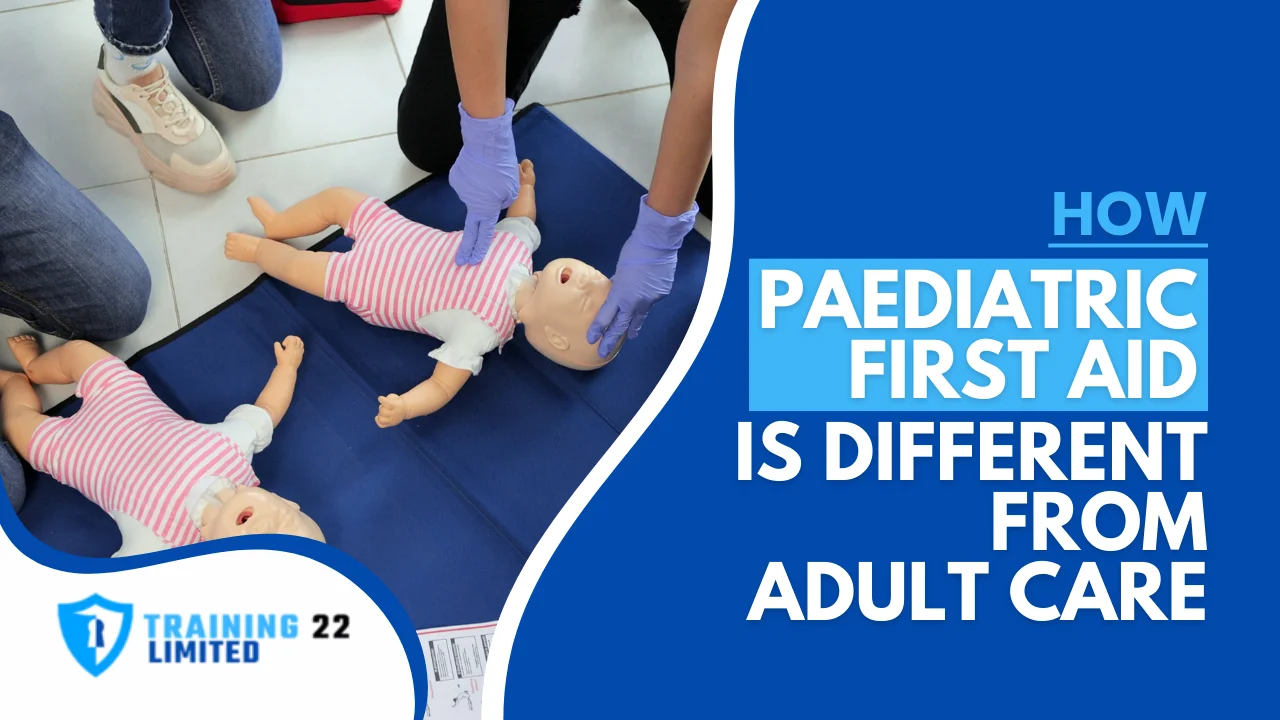
- Infants (under 1 year): Use 2 fingers in the centre of the chest. Press down about 4 cm (1.5 inches) deep. Do compressions quickly and gently, at a rate of 100-120 per minute.
- Children (1-8 years): Use one hand in the centre of the chest. Press down about 5 cm (2 inches) deep.
- Adults: Use two hands and compress at least 5-6 cm (2-2.5 inches) deep.
Paediatric CPR starts with 5 rescue breaths to give oxygen, since kids are more likely to have breathing problems. Adult CPR begins with chest compressions.
Our expert-led Emergency Paediatric First Aid Course in London teaches you these important differences in a practical, hands-on way.
Common Emergencies in Children vs. Adults
Children face different risks than adults, so their emergency care needs to match this. Common emergencies for kids include:
- Choking on small objects or food.
- Febrile seizures are caused by high fevers.
- Head bumps and fractures from playground accidents.
- Allergic reactions to common allergens like nuts, dairy, or insect bites.
In contrast, adults more often experience:
- Cardiac arrest.
- Heart attacks and strokes.
- Musculoskeletal injuries from manual labour.
- Falls due to balance issues or impaired mobility.
It’s important to notice the different trends in adult and child first aid. If you misjudge the situation, it could delay treatment and lower the chances of recovery.
Choking Protocols: Infant and Child vs. Adult
Choking is a major cause of accidental death for kids under five. How to respond depends on the child’s age and size.
- Infants (under 1 year): Perform 5 back blows between the shoulder blades using the heel of your hand, followed by 5 chest thrusts using two fingers.
- Children (1+ years): Administer 5 back blows followed by 5 abdominal thrusts (if trained). Support the child carefully to prevent falls.
- Adults: Use the Heimlich manoeuvre (abdominal thrusts) until the obstruction is cleared or the person becomes unconscious.
Using adult methods on infants can cause injuries or block the airway. That’s why first aid training for infants is essential for parents, caregivers, and early childhood staff.
Emotional Support and Communication
Using adult methods on infants can cause injuries or block the airway. That’s why first aid training for infants is essential for parents, caregivers, and early childhood staff.
Tips for providing emotional support:
- Use calming language and a soothing tone.
- Avoid sudden movements or shouting.
- Offer comfort objects (like a toy or blanket).
- Keep explanations simple and reassuring.
Adults are often vulnerable in emergencies, but usually understand their symptoms better and can explain what they feel. This makes their interactions more clinical. With children, the focus is on treatment, trust, and reassurance.
Use of Equipment and Medication
First aid kits and medical devices should match the patient’s age. What is safe for an adult might not be safe for a child.
- Paediatric kits include:
- Smaller adhesive bandages.
- Child-sized face shields for rescue breathing.
- Age-appropriate medications like liquid paracetamol or ibuprofen.
- Thermometers suitable for ear or forehead use.
- Adult kits typically contain:
- Larger wound dressings.
- Aspirin (contraindicated in children).
- Antiseptic sprays and muscle-relaxant creams.
AEDs (Automated External Defibrillators) should have child settings or pads that lower the shock level. Training helps you learn how to switch between adult and child modes.
Legal and Safeguarding Considerations
In situations involving children, safety is as crucial as medical care. Children have legal rights, and first aiders must know the rules that protect them.
Essential safeguarding components include:
- Gaining parental or guardian consent for treatment (when possible).
- Maintaining accurate, confidential records of the incident.
- Recognising signs of neglect or abuse.
Schools, nurseries, and child care centres must have trained staff in paediatric first aid and safety practises. That’s why our paediatric first aid course in London includes a section on safeguarding.
Training Requirements and Certification Differences
Not all first aid courses are the same. If you work with children, you need a course that focuses on them, not just a general one for adults.
- First Aid Training at work in London is ideal for workplaces like offices, construction sites, and retail environments where adult incidents are more common.
- A paediatric first aid course is essential for anyone working in early-years education, childcare, or children’s recreational services.
At Training 22, we provide our participants with recognised qualifications, practical experience, and real-life emergency practise.
Real-Life Case Studies: Why Specialised Knowledge Saves Lives
Let’s look at two real-life situations that show why the right first aid training matters:
- Case 1: A 2-year-old at a nursery starts choking on an apple. A staff member trained in adult CPR uses abdominal thrusts, risking injury to the child’s organs. Another staff member, trained in paediatric first aid, steps in with proper back blows and chest thrusts, successfully clearing the airway.
- Case 2: A 54-year-old office worker collapses from cardiac arrest. A colleague begins performing child-style compressions, which are too weak. Another employee, trained in workplace first aid, gives strong compressions, uses the AED, and helps save the man’s life before paramedics arrive.
These examples prove how vital the distinction between infant first aid and adult protocols can be.
Why Parents and Guardians Should Get Certified
If you have children, getting certified in paediatric first aid is a smart choice. Emergencies can happen at home or during outings, and professional help may take time to arrive.
As a certified first aider, you’ll be equipped to:
- Respond to allergic reactions or asthma attacks.
- Deal with nosebleeds, cuts, and head injuries.
- Recognise and respond to meningitis or febrile seizures.
- Perform child CPR or infant choking aid confidently.
Participants often say this training helps them feel calm during family holidays, school runs, and meals at home. Join our paediatric first aid course to be prepared when it matters.
One Size Doesn’t Fit All in First Aid
First aid isn’t a one-size-fits-all approach. Adults, children, and infants have different physical and emotional needs. Using the same methods for everyone is wrong and can be risky.
When you learn first aid for both adults and kids, you become a more confident responder. No matter if you’re at work, home, school, or out in public, you’ll be ready to save lives anywhere.
At Training 22, we offer both:
- First Aid Training at work in London for business and professional settings.
- Paediatric first aid course London for anyone who works with or cares for children.
Knowledge is strength. Certification brings comfort. Sign up today for our next children’s first aid course.