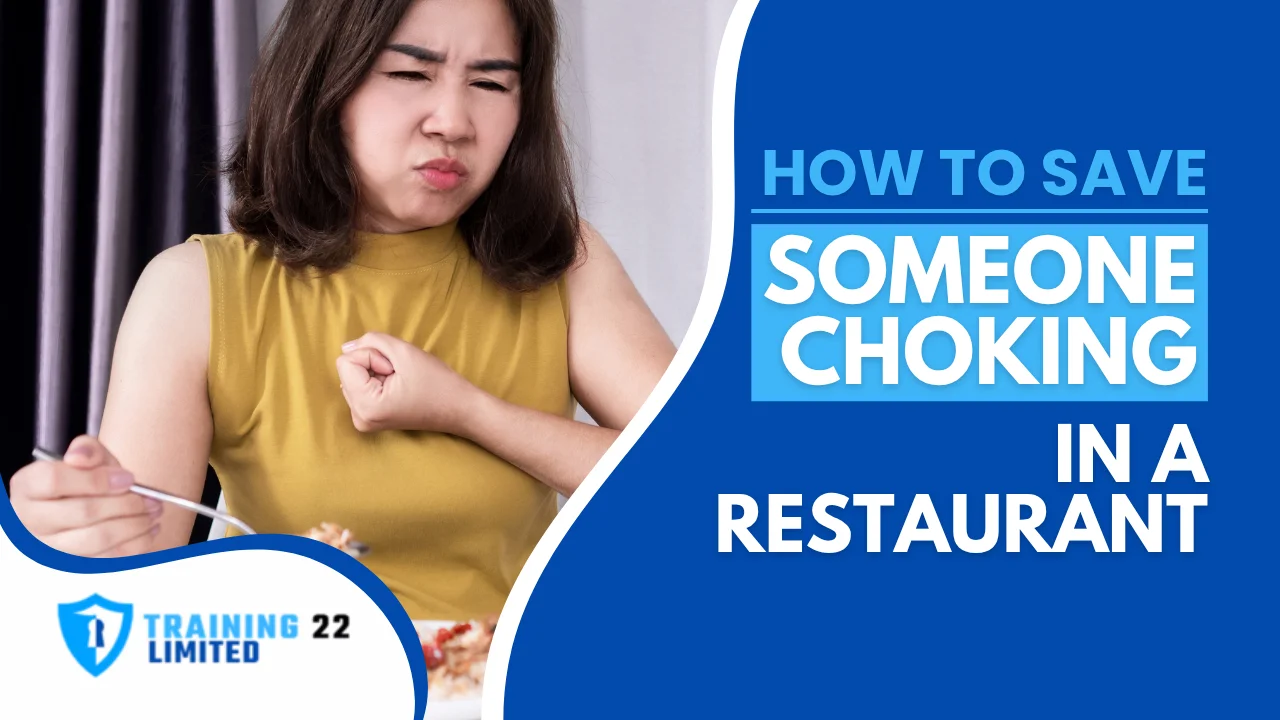
Imagine you’re at a busy restaurant, enjoying a meal, when suddenly someone next to you starts gasping for air. They clutch their throat, and the situation quickly turns serious. These moments happen more often than you might think. Knowing how to help someone who is choking can be the difference between life and death.
Choking can happen suddenly, especially in restaurants where people eat quickly, talk while chewing, or try new foods. Because of this, it’s vital to feel confident to act and know the right steps to take.
Learning choking first aid techniques helps you go from a bystander to someone who can truly help. Often, quick action from someone nearby can save a life before emergency services arrive.
Spot the Signs Early: Recognising Choking in Adults
Before you act, it’s important to know what choking looks like. Quickly spotting signs of choking in adults helps you respond confidently.
A choking person may:
- Struggle to speak or make noise
- Hold their throat (a sign of choking)
- Turn red, then blue in the face
- Cough weakly or not at all
- Look panicked or distressed
- Lose consciousness if not helped
- Mild vs. Severe Choking
It’s crucial to tell the difference between mild and severe choking. If the person can cough strongly, encourage them to keep coughing, as this helps clear the airway. If they can’t breathe, speak, or cough well, you need to act immediately.
Knowing how to respond to choking in public helps you step in without hesitation. The faster you recognise the signs, the quicker you can help.
Act Fast: Choking Emergency Response Steps Explained
When someone is choking, waiting can be dangerous. Quick action using the right steps can save a life in seconds.
Here’s what to do:
- Ask if they are choking – If they nod but can’t speak, act right away.
- Call for help – Tell others to call emergency services.
- Start back blows – Give firm hits between the shoulder blades.
- Move to abdominal thrusts if back blows don’t work.
Each step is important to remove the blockage. Back blows create pressure that may move the object, while abdominal thrusts use more force to push it out.
These choking first aid steps are simple but very effective when done correctly. Stay calm and focused to ensure your actions are clear and not rushed.
The Heimlich Manoeuvre: A Step-by-Step Guide for Restaurants
One of the best ways to clear a blocked airway is the Heimlich manoeuvre. Knowing how to use it in restaurants can help save lives in busy dining areas.
Here’s how to do the Heimlich manoeuvre:
- Stand behind the person.
- Wrap your arms around their waist.
- Make a fist and place it just above the navel.
- Grasp your fist with your other hand.
- Pull sharply inward and upward.
Repeat until the object comes out or the person starts breathing again. It might take several tries, so keep at it.
This method is crucial for handling choking in restaurants because it targets the blockage directly. Practising this technique can boost your confidence in real emergencies.
Special Situations: Helping Someone Choking While Seated
Restaurants often have seated diners, making it harder to help someone in an emergency. Tables and chairs can restrict movement, so you need to adjust your approach.
If the person is seated:
- Encourage them to stand if they can.
- If not, perform thrusts from behind the chair.
- Position yourself carefully for balance.
- Use firm upward movements.
Knowing how to handle choking in different positions prepares you for real-life situations. Being flexible is important. Whether the person is seated, standing, or in a crowded area, adjusting your technique can make your response more effective.
What About Children and Infants in Restaurants?
Choking in children needs a special approach. Foods like grapes, candy, nuts, and small snacks can easily block a child’s airway, especially in busy restaurants where supervision might sometimes slip.
For children:
- Use gentler abdominal thrusts.
- Adjust the force based on size and age.
Children are more at risk, so it’s crucial to act quickly. Knowing the right method for each age group lowers the chance of injury while clearing the airway.
This knowledge is especially vital for parents and restaurant staff. Training in basic life support can help build confidence in handling these emergencies safely.
The Role of Restaurant Staff in Preventing Choking Incidents
Restaurant staff play a crucial role in choking emergencies. They are on-site and trained to keep customers safe, which helps prevent serious injuries.
This is why choking training for restaurant staff in the UK is essential in the hospitality industry.
Staff should learn to:
- Quickly recognise the signs of choking
- Use proper response techniques
- Call emergency services right away
- Communicate clearly with customers and coworkers
Investing in basic life support training in London helps businesses create safer dining experiences. It protects customers and staff and builds trust, as customers feel safer knowing staff are prepared for emergencies.
Prevention is Better Than Cure: Reducing Choking Risks
Knowing how to respond is important, but preventing choking is just as vital. You can avoid many choking incidents by making simple changes.
Encourage:
- Eat slowly and chew your food well.
- Don’t talk or laugh while eating.
- Cut food into small pieces.
- Be careful with foods that are more likely to cause choking.
Restaurants can help by preparing food safely, labelling allergens clearly, and serving appropriate portion sizes.
Preventing choking lowers the chance of emergencies, but being ready allows you to act quickly if one happens.
Why First Aid Training Gives You Confidence in Emergencies
Many people hesitate to act in emergencies because they lack knowledge or fear making mistakes. This delay can prevent life-saving actions.
By taking basic life support training, people learn practical skills for real-life situations. These courses offer hands-on experience, helping you remember the steps during stressful moments.
Training 22 offers courses that boost your confidence and clarity. Whether you choose basic life support or workplace training, these skills help you act quickly and effectively.
Confidence comes from being prepared, and preparation can save lives.
Stay Calm, Stay Ready: Mental Preparedness Matters
In emergencies, panic can slow you down and cloud your judgment. Staying calm helps you think clearly and act quickly.
To prepare:
- Know the steps ahead of time
- Visualise different scenarios
- Trust your training and instincts
Being mentally ready is as important as being physically ready. The more prepared you are, the better you can respond in real situations.
You Could Be Someone’s Lifesaver
Choking can happen anywhere, especially in restaurants where people eat and talk. Knowing how to help someone who is choking can make a big difference.
By learning how to respond to choking emergencies, spotting the symptoms, and using the right techniques, you can save a life. Even basic knowledge can help a lot.
Taking a basic life support course with Training 22 in London will prepare you to act when needed. Your quick response could give someone a second chance.