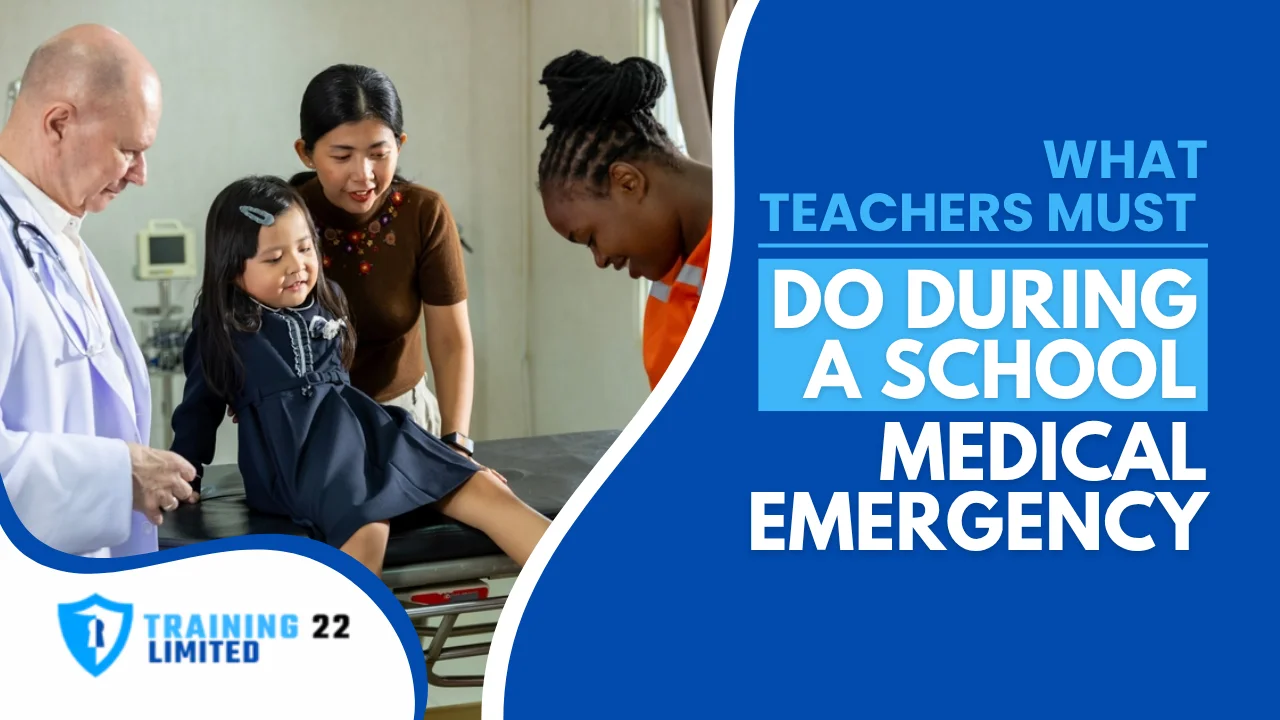
A normal school day can change quickly. One moment, students are focused on lessons and chatting with friends. Next, a child might collapse or struggle to breathe. These situations show why it’s important to be ready for a medical emergency in schools.
Teachers are more than just lesson deliverers; they are trusted adults who keep children safe. In an emergency, they often act as first responders before medical help arrives. Staying calm, assessing risks, and taking action can greatly affect the outcome.
Because of this, teachers must know how to respond to emergencies. This knowledge is crucial for protecting students’ lives. In this guide, we explain what teachers need to do in emergencies, step by step, and emphasise the importance of training in first aid and preparedness.
Understanding a School Medical Emergency
A school medical emergency in the UK is when a student’s health is in immediate danger and needs urgent help. These situations can happen suddenly, so it’s important to be aware and prepared.
Common examples include:
- Asthma attacks
- Severe allergic reactions (anaphylaxis)
- Seizures
- Head injuries
- Choking
- Cardiac arrest
Some issues may start small but can worsen quickly if not addressed. Recognising early warning signs is essential for student safety.
Often, children may not clearly express what they feel. They might seem confused, quiet, dizzy, or upset. Teachers should stay alert and trust their instincts. If something seems wrong, it’s better to act quickly than to wait.
The First Few Seconds: Stay Calm and Take Control
In a medical emergency, the first few seconds are crucial. Panic can spread quickly, especially among younger students. The teacher must stay calm and take charge.
Start by quickly checking the situation:
- Is the student awake or unconscious?
- Are they breathing normally?
- Is there any visible injury or bleeding?
This quick assessment helps you decide what to do next. Staying calm not only helps you but also keeps students from panicking. When students see a confident teacher, they are less likely to feel anxious.
Effective emergency response also means getting help. Ask a colleague, teaching assistant, or responsible student to notify the school office. This ensures that help is on the way while you focus on the injured student.
Giving clear instructions can make a big difference. For instance, telling someone to get a first aid kit or guide staff to your classroom can save valuable time.
Calling for Help: When to Dial 999
Knowing when to call emergency services is vital in a school medical emergency. Acting quickly can prevent serious problems, so it’s better to call if you’re unsure.
Call 999 right away if a student:
- Is unconscious or unresponsive
- Is not breathing or has irregular breathing
- Has severe, uncontrollable bleeding
- Shows signs of a severe allergic reaction
- Might have a spinal or head injury
While waiting for help, keep giving first aid and do not leave the student alone. Assign someone to meet the ambulance at the school entrance to guide the paramedics.
When talking to emergency operators, stay calm and give clear details. Include the child’s condition, exact location in the school, and any known medical history. Clear communication can help speed up response and improve outcomes.
Basic First Aid Steps Every Teacher Must Know
Effective first aid in schools can save lives. Every teacher should know the basics, even if a trained first aider is present. Emergencies need quick action, so it’s important to be prepared.
Key first aid steps include:
- Checking if the airway is clear
- Monitoring breathing and pulse
- Performing CPR if the student isn’t breathing
- Applying pressure to control bleeding
- Placing unconscious but breathing students in the recovery position
- These steps are essential for keeping students safe until help arrives.
However, knowing what to do is not enough. Acting confidently is also crucial. That’s why taking a paediatric first aid course is vital. Practical training helps teachers feel more confident and respond correctly in emergencies.
Managing Specific Emergencies in Schools
Every emergency is unique. Knowing how to react to different situations boosts your teacher emergency response skills in the UK and leads to better results.
Choking
- Encourage the child to cough forcefully
- Deliver back blows if the airway is blocked
Asthma Attack
- Help the student use their inhaler
- Keep them upright and calm
- Monitor breathing closely
Seizure
- Protect the head from injury
- Do not restrain movements
- Time the seizure duration
Severe Allergic Reaction
- Use an adrenaline auto-injector immediately
- Call emergency services without delay
Each situation needs a calm and informed response. A paediatric first aid course in London trains teachers to respond confidently and effectively during emergencies.
Keeping Other Students Safe and Calm
During a medical emergency at school in the UK, it’s important to focus on both the injured child and the rest of the class to avoid panic and keep everyone safe.
Children may feel anxious or scared. Teachers should:
- Speak calmly and reassuringly
- Give simple instructions
- Move students away from the scene if needed
Keeping control of the classroom supports the health and safety of all students and helps the emergency response go smoothly.
If possible, ask another staff member to supervise the rest of the class. This lets you fully focus on the emergency while ensuring the safety of all students.
Communication with Staff and Parents
Clear communication is crucial during and after a school medical emergency in the UK. Once the situation is stable, inform senior staff and follow your school’s emergency plans.
Contact parents or guardians right away. Share accurate information about what happened, the actions taken, and the next steps.
Avoid guessing or making assumptions. Stick to the facts to build trust and ensure transparency.
Schools should keep detailed records of the incident. This documentation helps improve future first aid practises and supports accountability.
Legal Responsibilities and Duty of Care
Teachers in the UK must care for their students’ safety. This means they need to act quickly in emergencies and always put students’ health first.
If teachers don’t act or respond incorrectly, they could face serious legal issues. Schools must make sure all staff are well-trained and supported.
Important policies should cover:
- How to respond to emergencies
- First aid roles
- Managing medical conditions
Understanding these duties helps teachers respond confidently in emergencies and keeps both staff and students safe.
The Importance of Training and Preparedness
Preparation is key for effective emergency response. Without the right training, even simple situations can be stressful.
Courses like emergency paediatric first aid offer practical experience. They help teachers respond quickly, make smart choices, and stay calm in tough situations.
Key benefits of training include:
- Faster and more effective responses
- Greater confidence during emergencies
- Better outcomes for students
- A stronger safety culture in schools
Investing in first aid training for schools is essential. It protects children and meets UK standards.
Building a Safer School Environment
Responding to emergencies is important, but preventing them is just as crucial. Schools should create a safe environment to reduce risks.
This means:
- Doing regular risk assessments
- Keeping first aid kits full
- Training staff continuously
- Having clear emergency procedures
By prioritising student health and safety, schools can lower the chances of emergencies and handle them better when they happen. A proactive approach protects students and boosts confidence among staff and parents.
Why Every School Should Invest in Specialist Training
Modern schools face many health challenges, including allergies and chronic conditions. Therefore, trained staff is crucial.
Enrolling teachers in a paediatric first aid course prepares them for emergencies involving children. These courses teach real-life scenarios, enabling teachers to respond quickly and effectively.
In London, paediatric first aid courses provide accessible, recognised training that meets UK standards. Shorter emergency courses offer essential knowledge for immediate situations.
By investing in training, schools show their commitment to safety and high-care standards.
Be Prepared, Stay Confident, Save Lives
A school medical emergency can happen at any time. With the right knowledge and training, teachers can respond quickly and effectively.
Every second counts. The actions taken in the first moments can decide the outcome for a child in distress.
By improving your emergency response skills and committing to first aid training, you are not just meeting requirements. You are helping to protect lives and create a safer environment for all students.