Basic Life Support (BLS) is not just for doctors and paramedics. It includes simple actions anyone can take to help someone until professional help arrives. Every day in the UK, there are thousands of cardiac arrests, choking incidents, and medical emergencies in homes, workplaces, schools, and public areas. In these critical moments, quick thinking and BLS training can save lives.
BLS is powerful because it is easy to learn. You don’t need advanced tools or medical knowledge to help someone. All you need is awareness, confidence, and a willingness to act. That’s why BLS training is valuable in everyday life, not just in healthcare.
At Training 22, we witness how BLS training helps ordinary people become confident responders. Whether it’s a colleague collapsing at work, a child choking at home, or a stranger needing help in public, BLS skills enable people to act calmly. This growing confidence leads to safer workplaces, stronger communities, and better outcomes in emergencies across the UK.
Understanding Basic Life Support in Plain English
Basic Life Support (BLS) helps keep essential body functions going until medical help arrives. It involves spotting emergencies quickly, calling for help, doing CPR, using an AED, and clearing blocked airways. Though these steps seem simple, they are essential for effective emergency care.
BLS is about ensuring blood and oxygen reach the brain and heart. When breathing or blood flow stops, every second counts. BLS training teaches people how to recognise danger signs early and act correctly, which is vital during a cardiac arrest.
In the UK, BLS training follows easy-to-learn national guidelines. Unlike advanced medical training, BLS is practical and hands-on, making it suitable for anyone, including parents, teachers, office workers, shop staff, and community volunteers.
The Real Impact of Cardiac Arrest Response
Sudden cardiac arrest is a leading cause of death in the UK. It can occur suddenly in people of any age, often outside hospitals. When the heart stops, the brain stops receiving oxygen. Without quick help, brain damage can start within minutes.
A quick and confident response to cardiac arrest greatly increases the chances of survival. Basic life support (BLS) training teaches people to recognise cardiac arrest quickly and begin CPR immediately. Chest compressions keep blood flowing to vital organs, buying time until emergency services arrive.
Research shows that early CPR and using an AED can double or even triple survival rates. This is why CPR and BLS training are essential skills for the public to learn.
How CPR Skills Turn Bystanders into Lifesavers
Many people hesitate to help during emergencies because they worry about doing something wrong. Basic life support training helps overcome this fear by providing clear guidance and boosting confidence. When people know what to do and why it’s important, they’re more likely to help.
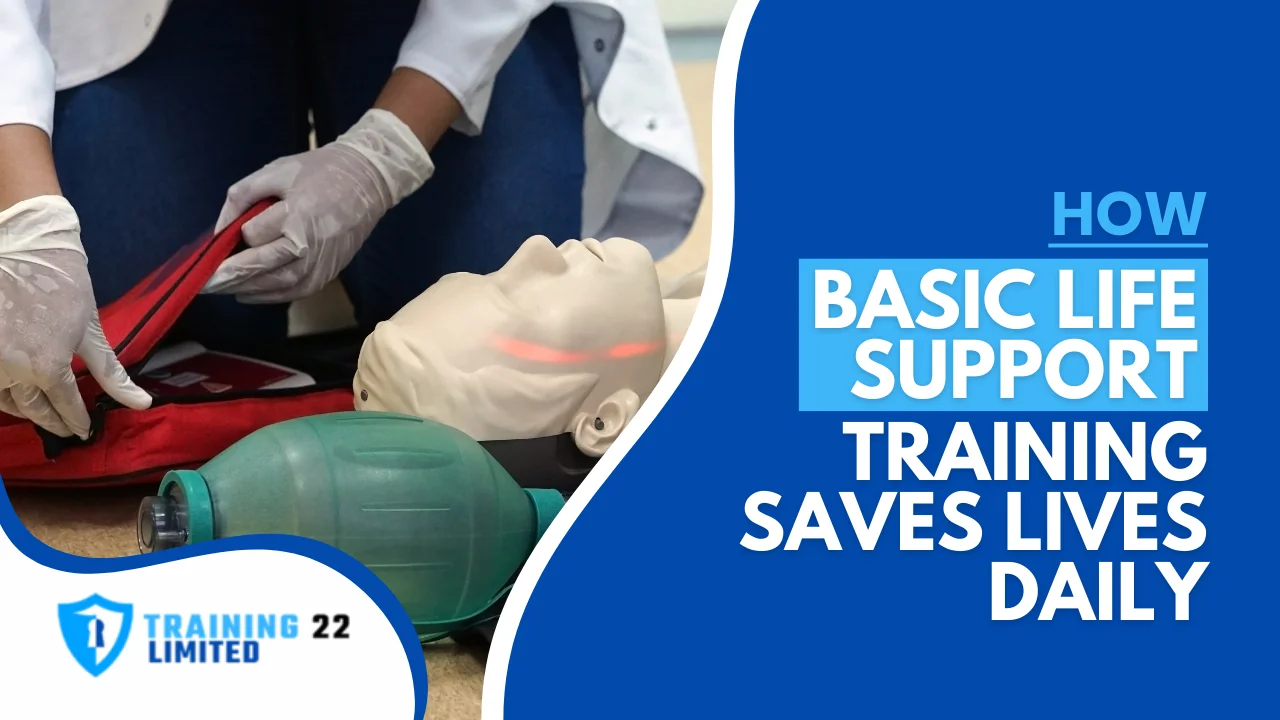
In CPR and BLS training, learners practise real-life situations using manikins and AED trainers. This hands-on method builds muscle memory, reduces hesitation, and improves decision-making under stress. As a result, when an emergency happens, trained individuals respond quickly instead of freezing.
Key CPR Skills You Learn
- How to check responsiveness and normal breathing.
- When and how to call emergency services.
- Correct hand placement, compression depth, and rhythm.
- Safe and confident use of an automated external defibrillator.
- Coordinating CPR with other responders until help arrives.
These practical skills are essential for basic life support training and lead to better survival rates.
Everyday Emergencies Where BLS Saves Lives
Basic life support (BLS) training offers important benefits beyond helping with cardiac arrests. Every day, people encounter medical emergencies where quick action is crucial. These situations often occur in everyday places like homes, offices, stores, schools, and public transport.
Choking, severe allergic reactions, breathing problems, drownings, and sudden collapses are emergencies where BLS skills are essential. With BLS training, people learn how to assess emergencies, prioritise actions, and prevent worsening conditions while waiting for professional help.
Being able to respond calmly and effectively can prevent minor issues from turning into serious emergencies.
Why Basic Life Support Training Is Essential in Workplaces
Workplaces often face medical emergencies. Accidents and sudden illnesses can occur in offices, warehouses, retail stores, and construction sites. Employers must ensure the safety of their staff, customers, and visitors.
Basic life support (BLS) training helps businesses comply with health and safety rules while fostering a readiness culture. Employees who complete BLS training feel more confident and valued, and they are better prepared for emergencies.
Training 22 offers basic life support courses specifically for workplaces in the UK. These courses align with First Aid Training at Work and Emergency First Aid Training at Work programs, providing a comprehensive approach to staff safety training.
Building Community Confidence Through Training
When more people in a community learn BLS, everyone gains. Communities with more BLS training usually have quicker responses and better results in emergencies.
Parents, caregivers, teachers, volunteers, and leaders all help keep the community safe. By supporting CPR and BLS training, communities build networks of everyday lifesavers ready to help when needed.
This shared duty builds trust, resilience, and confidence in neighbourhoods and public areas.
Paediatric Emergencies and the Importance of Early Action
Children are especially at risk during medical emergencies. Choking, breathing problems, seizures, and sudden illnesses can worsen quickly without quick help.
Basic life support training often includes lessons for infants and children. These skills are important for parents, childcare workers, teachers, and anyone caring for kids.
At Training 22, BLS training is combined with paediatric first aid training. This approach helps learners understand the differences in emergency care for different ages, making homes, nurseries, and schools safer.
How BLS Training Supports Mental Readiness
Emergency situations are stressful, even for trained professionals. One key benefit of basic life support training is mental preparedness.
Knowing the right actions to take helps reduce panic and keeps people focused on what to do. Training enhances calm communication, teamwork, and leadership in emergencies.
These mental skills are as important as physical techniques during a cardiac arrest or other high-pressure scenarios.
BLS Training and the Role of AEDs in Public Spaces
Automated external defibrillators (AEDs) are now found in many places in the UK, including shopping centres, gyms, offices, airports, and transport hubs. However, many people still don’t know how to use them.
CPR and BLS training clears up this uncertainty. Learners practise using AEDs safely and confidently, knowing that these devices are meant for public use.
When used with effective CPR, AEDs greatly improve survival chances during sudden cardiac arrest. This makes knowing how to use AEDs an essential part of emergency care skills.
Why Everyone Should Learn Basic Life Support
Medical emergencies can happen to anyone, regardless of age, job, or location. Anyone nearby can be a first responder.
Basic life support training provides the skills needed to act confidently in emergencies. Whether you’re a parent, worker, business owner, or just part of the community, learning these skills helps you protect others.
The benefits of basic life support training also include feeling more confident and prepared in daily life.
Choosing the Right BLS Training in the UK
Not all training providers offer the same quality or support. By choosing a trusted provider, learners get accurate and up-to-date instruction from experienced trainers.
Training 22 provides high-quality basic life support courses in the UK for individuals, workplaces, and organisations. Courses like CPR and BLS in London and First Aid at Work Training focus on practical skills, building confidence, and real-world application.
How Training 22 Helps You Make a Real Difference
Training 22 aims to improve public safety with easy-to-access, high-quality training. We offer professional instruction in a friendly, supportive environment, helping learners build their skills and confidence.
If you want to enhance workplace safety, protect your family, or help your community, basic life support training is a valuable investment. With the right skills, you can go from being a bystander to someone who can save lives every day.