Electricity powers our homes, workplaces, and daily lives. However, when something goes wrong, an electric shock can become a medical emergency within seconds. In some cases, the victim may walk away with only minor injuries. In others, the electrical current can stop the heart, interrupt breathing, and lead to a life-threatening situation that demands immediate action.
Knowing how to perform CPR after an electric shock can save lives. Many people think that once the power is off, the danger is gone. But that’s not always true. Electric shock can cause hidden injuries, severe burns, heart problems, and even cardiac arrest. So, it’s crucial to know how to respond in an electrical emergency.
Whether the incident happens at home, a construction site, in an office, or in public, every second counts. The sooner a bystander sees the signs of a serious electric injury and provides first aid, the higher the chances of survival.
When an electric shock stops someone’s breathing or heartbeat, knowing what to do can save a life. Electric injuries can cause sudden cardiac arrest and other severe issues without warning. Recognising when someone is unconscious after a shock and taking the right steps for resuscitation can greatly improve survival chances while waiting for emergency help. Learning and practising CPR also helps people stay calm and act effectively in a crisis.
Understanding Electric Shock Injuries: More Than Just a Burn
How Electricity Affects the Human Body
An electric shock happens when an electrical current flows through the body. How serious the injury is depends on several factors, such as the voltage, the current’s path through the body, how long the contact lasts, and the person’s overall health.
Many people think electrical injuries only cause burns. While burns are common, they don’t show the whole picture. Electrical current can hurt muscles, nerves, blood vessels, and internal organs without visible signs. That’s why every serious electrical accident needs careful attention.
Electricity travelling through the chest can disrupt the heart’s electrical system. This may lead to dangerous heart rhythms or even cardiac arrest, where the heart stops pumping effectively.
Why Electrical Injuries Can Become Fatal
An electric shock can seriously disrupt heart and breathing functions. Breathing muscles may freese, and the heart can beat dangerously irregularly.
In severe cases, the victim might lose consciousness, stop breathing, and have no pulse. Quick action is essential during these moments. Without oxygen-rich blood reaching the brain and vital organs, lasting damage can happen in minutes.
Because of these dangers, everyone should know when to perform CPR and how to start life-saving treatment safely.
The Hidden Link Between Electric Shock and Cardiac Arrest
Why the Heart Is Especially Vulnerable
The human heart needs accurate electrical signals to keep a steady rhythm. An external electrical current can quickly disrupt these signals.
Even a short exposure to electricity can cause ventricular fibrillation, where the heart shakes instead of pumping blood. Without quick treatment, this can be deadly.
That’s why CPR is often used for electrocution victims in serious electrical accidents. The victim may look still, unresponsive, and not breathing normally because their heart isn’t working properly.
Signs That Cardiac Arrest Has Occurred
Recognising cardiac arrest quickly is crucial. The faster you start CPR, the better the chances of survival.
Look for these signs:
- The person is not responding.
- They are not breathing normally.
- Breathing is missing or consists only of gasps.
- There is no movement.
- The person collapses suddenly after electrical contact.
If these symptoms show up after an electrical injury, assume it’s cardiac arrest and start helping right away.
Your Safety Comes First: Never Touch the Victim Too Soon
Eliminate the Electrical Danger
Before helping someone, make sure the electrical source is off. This is a crucial rule in electrical emergencies.
Never touch a person who is still in contact with electricity; you could get shocked, too.
If it’s safe, do the following:
- Turn off the power.
- Unplug the device.
- Use a dry wooden stick to move the person away from the source.
- Stay away from water and metal surfaces.
If you can’t safely turn off the power, call emergency services and wait for help.
Assess the Scene Carefully
First, make sure the electrical hazard is gone. Then, look for other dangers like fire, exposed wires, broken equipment, or unsafe structures.
Stay calm and act carefully to keep both the victim and yourself safe. Once the area is secure, check the victim’s condition to see if they need CPR after an electric shock.
How to Assess an Electric Shock Casualty
Check for Responsiveness
Gently shake the person’s shoulders.
Shout, “Can you hear me?”
If they don’t respond, they are unresponsive.
Ask someone nearby to call 999 and get an AED if one is available.
Check Breathing
Tilt the head back and lift the chin to open the airway.
Check for breathing for up to 10 seconds by watching, listening, and feeling. Normal breathing is steady and effective. Gasping does not count as normal breathing.
If the person is not breathing normally or is unresponsive, start emergency CPR right away.
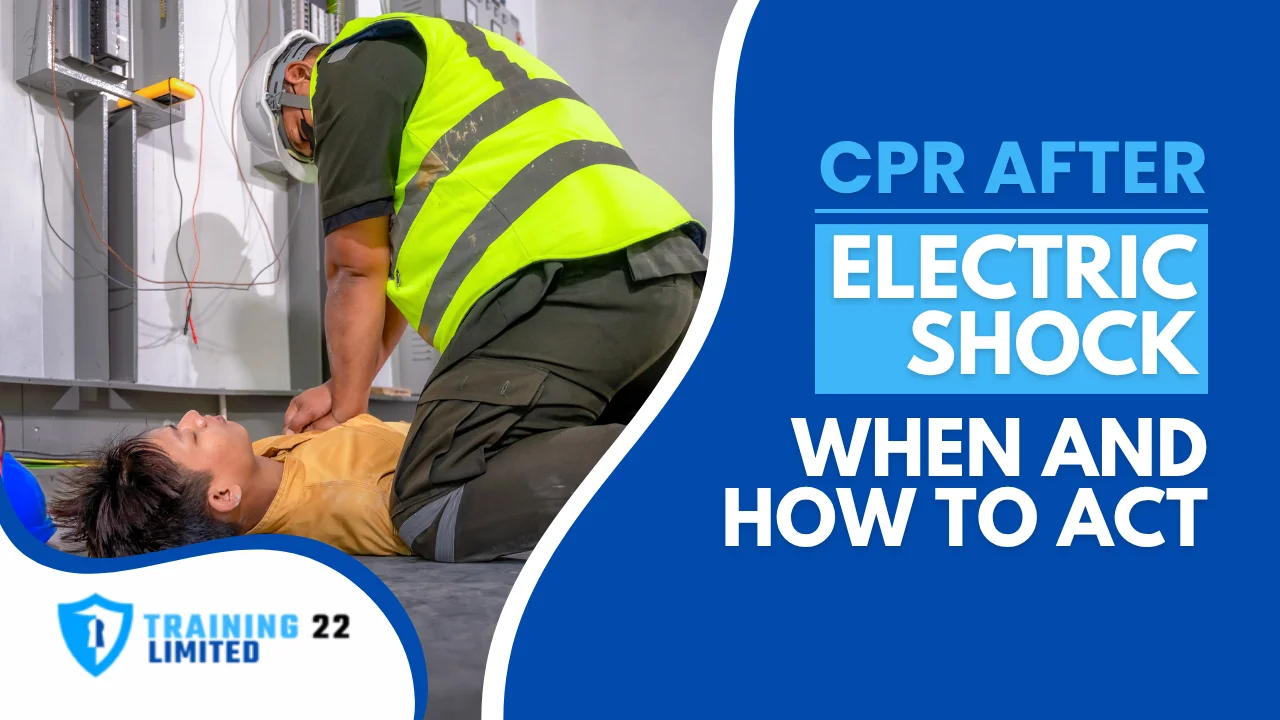
CPR After Electric Shock: Step-by-Step Guide
Step 1: Call Emergency Services
Call 999 right away or ask someone nearby to do it.
Tell the operator:
- The person received an electrical shock.
- They are unconscious.
- They are not breathing normally.
- CPR is in progress.
Giving clear information helps emergency responders get ready with the right tools and care.
Step 2: Start Chest Compressions
Place the heel of one hand in the centre of the chest.
Put your other hand on top and lock your fingers together.
Press hard and fast:
- Depth: 5–6 cm
- Rate: 100–120 compressions per minute
Let the chest rise completely between compressions.
Quality compressions are key to effective CPR after an electric shock.
Step 3: Give Rescue Breaths
After 30 compressions:
- Open the airway.
- Pinch the nose shut.
- Give two rescue breaths.
Each breath should last about one second and should make the chest rise.
Continue with:
- 30 compressions and 2 breaths.
- Repeat until help arrives or the person starts breathing normally.
Using an AED During an Electrical Emergency
Why AEDs Save Lives
An Automated External Defibrillator (AED) can check the heart’s rhythm and give a shock if needed. For many cardiac arrest victims, defibrillation is the only effective treatment. The sooner you use an AED, the better the chances of survival.
How to Use an AED
AEDs are meant for public use and give clear voice instructions.
Here are the basic steps:
- Turn on the AED.
- Attach the pads as shown.
- Follow the voice prompts.
- Make sure no one touches the person during analysis.
- Deliver a shock if instructed.
- Start CPR right away after the shock.
Always do CPR without waiting for an AED.
Special Considerations for High Voltage Electrical Injuries
Why High Voltage Incidents Are Different
High-voltage electrical injuries can cause serious internal damage.
Even if a person seems stable, serious problems can arise later.
Potential injuries include:
- Deep tissue burns
- Organ damage
- Fractures from violent muscle contractions
- Neurological injuries
- Heart rhythm disturbances
Because of these risks, all high-voltage injuries need immediate medical attention.
Continuing Care After Resuscitation
If the person wakes up:
- Reassure them.
- Keep them warm.
- Watch their breathing closely.
- Treat any burns you see.
- Wait for emergency help.
- Do not let them walk around or go back to work.
Common Mistakes People Make During Electrical Emergencies
Touching the Casualty Too Early
Rescuers often hurry to help. However, touching someone connected to a live electrical source can cause further injuries. Always turn off the power first.
Assuming the Casualty Is Fine
Some electrical injuries show symptoms later.
A person may feel fine, but they could still have internal injuries or heart rhythm issues.
It’s important to see a doctor after significant electrical exposure.
Building Confidence Through First Aid Training
Why Training Makes a Difference
Learning about CPR is important, but hands-on training builds the confidence to respond well in emergencies. Many people hesitate in a crisis because they haven’t practised the skills. A certified 3-day first aid at work course gives you practical experience with CPR, using an AED, assessing casualties, and emergency response steps.
Learn Life-Saving Skills With Training 22
At Training 22, our first aid courses help people and workplaces get ready for emergencies.
You can choose a course in First Aid at Work Course, Emergency First Aid at Work Course, or Basic Life Support Training. Each option teaches practical skills that could save a life.
The courses cover:
- CPR techniques
- How to use an AED
- Emergency response steps
- Caring for unconscious people
- First aid in workplace situations
- Handling life-threatening medical issues
With professional training, you’ll gain confidence that can be crucial when every second matters.
The Seconds That Matter Most
An electrical shock can quickly turn from a scary moment into a dangerous emergency. If someone loses consciousness, stops breathing, or has a heart attack after a shock, it’s crucial to act fast.
Knowing CPR, recognising the warning signs, and following the right steps for resuscitation can greatly increase survival chances. Always put your safety first. Make sure to disconnect the electrical source before helping the person.
By learning CPR and being prepared, anyone can become a lifesaver when it counts.
FAQ: CPR After Electric Shock
Can electric shock cause cardiac arrest?
Yes. Electrical current can interrupt the heart’s rhythm and cause cardiac arrest.
Should I perform CPR after an electric shock?
If the person is unresponsive and not breathing normally, start CPR right away after making sure the power source is turned off.
What should I do if someone is unconscious after an electric shock?
Call 999, check if the person is breathing, and begin CPR if needed.
Can a person recover after electrical cardiac arrest?
Yes. Early CPR and quick use of an AED greatly increase chances of survival.
Is CPR different for an electrocution victim?
The CPR process is the same, but rescuers must first make sure the electrical source is turned off.