Sepsis is a serious medical emergency for children, but many parents don’t notice the warning signs until it’s severe. The symptoms often look like common childhood illnesses, making it easy to miss early signs of sepsis.
Every year in the UK, families face the painful effects of late sepsis diagnosis. The good news is that recognising symptoms early and getting medical help can greatly improve outcomes.
Knowing the early signs of sepsis can be crucial when every minute matters. Many warning signs are overlooked because they resemble common illnesses. By understanding what to watch for, why sepsis happens, and when to seek urgent care, parents, caregivers, and teachers can act quickly and effectively.
What Is Sepsis and Why Is It So Dangerous?
Sepsis happens when the immune system overreacts to an infection and starts attacking the body’s own organs and tissues. Instead of just fighting the infection, the immune response spreads throughout the body. This can cause inflammation, organ damage, blood clotting problems, and low blood pressure. If not treated quickly, sepsis can lead to septic shock, which can be life-threatening.
Children can get sepsis from infections like:
- Chest infections
- Ear infections
- Meningitis
- Urinary tract infections
- Skin infections
- Infected wounds
- Gastrointestinal infections
Although sepsis is rare, it can develop rapidly. That’s why it’s important for parents and caregivers to recognise the early signs of sepsis in children.
Why Parents Often Miss the Early Signs
Parents often find it hard to spot sepsis because its symptoms look like those of common childhood illnesses. A child might first seem to have a simple viral infection or just feel unwell.
Children, especially younger ones, can’t always explain how they feel. Babies and toddlers may become cranky, sleepy, or clingy. This means that warning signs of a serious infection can be confused with tiredness or a mild illness.
Since symptoms can get worse quickly, it’s vital to notice any small changes in a child’s behaviour, appearance, and responsiveness.
Sign #1: Unusual Sleepiness or Difficulty Waking Up
When Tiredness Becomes a Warning Sign
One early sign of sepsis in children is excessive sleepiness. While kids often feel tyred when sick, tiredness from sepsis is different. The child may be hard to wake, have trouble staying awake, or seem confused and out of it.
Parents usually think their child just needs rest. However, severe fatigue can mean the body is having a hard time fighting an infection.
Understanding Lethargy and Sepsis in Children
Healthcare professionals closely monitor lethargy and sepsis in children as they can indicate serious health issues.
Warning signs to watch for include:
- Sleeping much more than usual
- Not responding typically to parents
- Weak crying in babies
- Showing little interest in toys or activities
- Reduced eye contact
- Seeming floppy or hard to wake
If a child is unusually sleepy and hard to wake, get medical help right away.
Sign #2: Breathing Faster Than Normal
Changes in Breathing Patterns
Rapid breathing is another symptom that is often overlooked.
As sepsis progresses, the body has trouble supplying enough oxygen to tissues and organs. To make up for this, breathing tends to speed up and become harder.
Children may:
- Breathe noticeably faster
- Breathe shallowly
- Seems short of breath
- Use chest muscles heavily while breathing
- Flare their nostrils
These symptoms can look like asthma or respiratory infections.
Why Fast Breathing Matters
Child healthcare professionals closely watch for abnormal breathing as a key sign of sepsis.
Parents should listen to their instincts. If a child is breathing harder than normal, even without a high fever, they should seek medical attention right away.
Sign #3: A Fever That Doesn’t Match the Child’s Behaviour
Looking Beyond the Temperature
Many childhood illnesses cause fever. However, with sepsis, the child’s overall health is often more important than the fever level.
Some children with sepsis have a high fever. Others may have a normal temperature or feel cold.
That’s why doctors look at the entire child instead of just the thermometer readings.
Additional Symptoms Alongside Fever
Watch for:
- Ongoing fever
- Chills or shivering
- Cold hands and feet
- Pale skin
- Unusual irritability
- Less responsiveness
When these signs appear with an infection, they might mean serious sepsis in children.
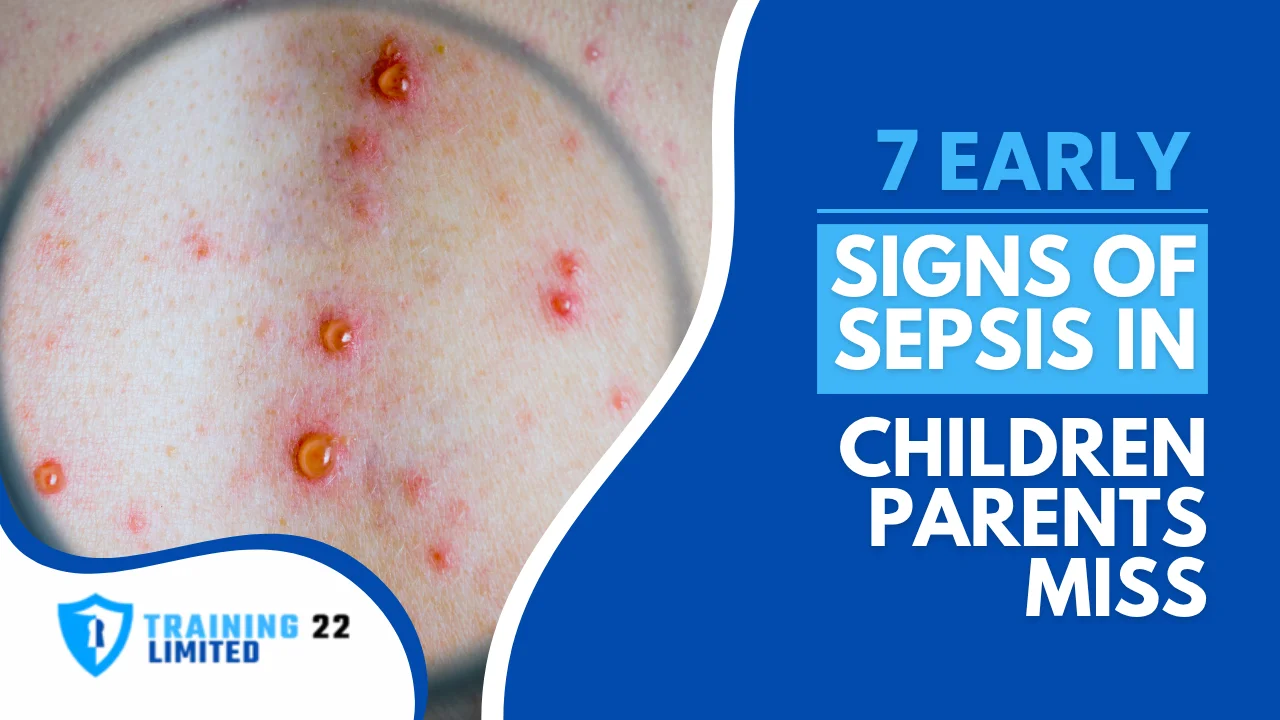
Sign #4: A Sepsis Rash in Children
Not All Rashes Are Harmless
A worrying symptom of sepsis in children is a rash.
This rash looks like small red, purple, or dark spots that don’t disappear when pressed.
Parents can use the “glass test” by pressing a clear glass against the rash. If the spots stay visible, they need to seek medical help right away.
Why the Rash Appears
Sepsis can hurt blood vessels and circulation, which can lead to a rash. Not all children with sepsis get a rash, but when they do, it’s one of the most urgent symptoms that doctors watch for. Always seek medical help right away; don’t wait to see if the rash gets better on its own.
Sign #5: Cold, Pale, or Mottled Skin
What Changes in Skin Colour Can Mean
The skin can give important signs about a child’s health.
As sepsis gets worse, blood flow can drop. This can lead to:
- Pale skin
- Bluish lips
- Cold hands and feet
- Mottled or patchy skin
- A greyish look
These changes are especially clear on the hands, feet, lips, and nails.
Trust What You See
Parents often say a child with sepsis “looks wrong” or “doesn’t look like themselves.”
Even if you can’t say exactly what seems off, changes in the skin should never be ignored.
These signs of infection in a child often mean that urgent medical help is necessary.
Sign #6: Reduced Eating, Drinking, or Wet Nappies
Signs of Dehydration and Illness
Children with sepsis often don’t want to eat or drink. Babies may refuse to feed, while older kids might not drink or may throw up fluids. While it’s normal to eat less when sick, a big drop in appetite can mean a more serious problem.
What Parents Should Watch For
Watch for these signs:
- Fewer wet nappies
- Dry mouth
- Sunken eyes
- No tears when crying
- Refusing to drink
- Ongoing vomiting
These can show dehydration and a worsening infection. If you notice these along with other early signs of sepsis in children, seek medical help right away.
Sign #7: Extreme Irritability or Behaviour Changes
Behavioural Changes Are Often Overlooked
Parents often think a seriously ill child will be quiet and withdrawn. However, some kids can become very irritable or upset. They might:
- Cry a lot
- Reject comfort
- Become clingy
- Look confused
- Seem restless
Any sudden changes in a child’s personality or behaviour should be taken seriously.
Why Behaviour Matters
Healthcare professionals see behaviour changes as key signs of sepsis in kids.
Children often show illness through their behaviour before they display physical symptoms. So, parents should take major changes in behaviour seriously and not just brush them off as tiredness or bad moods.
When Should Parents Seek Emergency Help?
Know the Red Flags
If you see several symptoms at once, act fast.
Get immediate medical help if your child:
- It’s hard to wake
- Has trouble breathing
- Gets a rash that won’t go away
- Has blue, pale, or spotted skin
- Looks confused
- Has a seizure
- Is unresponsive
These signs are serious and need immediate attention from healthcare professionals.
Trust Your Instincts
Parents understand their children well.
If your child seems much worse than expected or if something feels off, get medical help right away. Early treatment can save lives.
How Sepsis Is Diagnosed and Treated
Hospital Assessment
When sepsis is suspected, healthcare professionals may do the following:
- Blood tests
- Urine tests
- Monitor oxygen levels
- Check blood pressure
- Perform imaging scans
- Screen for infection
Doctors try to find the source of the infection and see how the body is responding.
Treatment Options
Treatment usually starts right away and may include:
- Antibiotics through an IV
- Oxygen therapy
- IV fluids
- Medicine to support blood pressure
- Close monitoring in intensive care if needed
Quick treatment greatly improves recovery.
Can Sepsis Be Prevented?
Reducing Infection Risks
Parents can lower the risk of infection by:
- Keeping vaccinations current
- Practising good hand washing
- Getting treatment for infections quickly
- Watching wounds closely
- Following healthcare advice after illness
These steps can help prevent serious infections.
Education Makes a Difference
Recognising warning signs of infections in children is a key way to protect them. Many parents learn about sepsis only after facing it themselves. Raising awareness helps families respond quickly, which can prevent serious health issues.
Why First Aid Knowledge Matters for Parents and Childcare Professionals
Being Prepared for Medical Emergencies
Recognising the early signs of sepsis in children is just one part of responding well. Knowing how to act while waiting for emergency help can really help. Parents, nursery staff, teachers, childminders, and caregivers all gain from proper first aid training.
A good paediatric first aid course teaches practical skills for spotting serious illnesses, handling emergencies, and responding confidently when a child gets sick.
Building Confidence Through Training
At Training 22, our paediatric first aid courses in London help parents, caregivers, and professionals spot life-threatening conditions like sepsis.
Our emergency paediatric first aid course teaches key emergency response techniques, so learners know when to get urgent medical help and how to act quickly until professionals arrive.
The more people who recognise the warning signs of serious illness, the safer children will be.
Spotting Sepsis Early Could Save a Child’s Life
Sepsis can develop quickly, and its early signs often look like common childhood illnesses. Learning these signs helps parents and caregivers know when something serious may be happening.
Watch for:
- Unusual sleepiness
- Fast breathing
- Fever with concerning symptoms
- A rash
- Pale or blotchy skin
- Less eating or drinking
- Changes in behaviour
Trust your instincts. If your child seems very unwell or shows multiple symptoms, get medical help right away.
Being aware, recognising early signs, and getting prompt treatment are key to protecting children from sepsis.
Frequently Asked Questions (FAQs)
Can a child have sepsis without a rash?
Not every child with sepsis shows a rash. Many children have different symptoms, like trouble breathing, tiredness, or changes in behaviour.
What are the first sepsis symptoms in kids?
Early symptoms often include fever, fast breathing, unusual sleepiness, poor appetite, irritability, and cold hands or feet.
Is lethargy always a sign of sepsis?
No. Lethargy and sepsis in children are closely related. When a child is hard to wake, unresponsive, or much less active than usual, it can be a sign of sepsis.
How quickly can sepsis develop?
Sepsis can get worse quickly. That’s why it’s crucial to spot the early signs of sepsis in children and get medical help right away.
What should I do if I suspect sepsis?
Call NHS 111 for urgent help, or dial 999 if your child has serious symptoms like trouble breathing, a rash that doesn’t go away, unresponsiveness, or signs of septic shock.
Can healthy children develop sepsis?
Yes. Sepsis can affect healthy children, too, especially after an infection, but kids with health conditions are at greater risk.
Does sepsis always start with a serious infection?
No. Sepsis can come from infections that seem minor, like ear infections, chest infections, urinary tract infections, or cuts that become infected.
Can first aid training help identify sepsis?
A paediatric first aid course teaches parents and childcare workers how to spot serious illnesses, like sepsis, and respond correctly.