School trips allow children to visit museums, nature reserves, theatres, sports venues, and historic sites, bringing classroom learning to life. However, moving students from the familiar school environment changes how staff must think about health and safety. Medical issues that are easy to manage at school can become complicated when travelling or in remote areas far from medical help.
That’s why schools need to prepare for medical emergencies before students board a bus or leave the school grounds. Good preparation doesn’t mean expecting the worst; it means knowing who might need help, deciding who will respond, having the right equipment and information, and ensuring staff understand what to do if things change suddenly.
In England, the Department for Education says schools must provide first aid during off-site activities. Schools should also have an emergency response plan for incidents away from school, and trip leaders should know these plans well.
To effectively handle medical emergencies on school trips, schools should conduct risk assessments, gather accurate medical information, have suitable first aid arrangements, ensure clear communication, manage medicines safely, and coordinate emergency responses.
Requirements differ across England, Scotland, Wales, and Northern Ireland, as well as between different types of schools. Schools must follow the laws, guidelines, local authority rules, and organisational policies that apply to them.
Why Medical Emergency Planning Matters Before Every School Trip
A school trip changes how staff take care of student needs. At school, staff can quickly access the medical room, student records, other colleagues, first aid supplies, and emergency plans. During a trip, these resources might be far away.
A student could have an asthma attack while walking between locations. Another might have a severe allergic reaction at lunch. Someone could get injured during an outdoor activity, fall ill on the bus, or face an existing health issue unexpectedly. Good emergency planning for trips readies staff for these situations without letting fear stop valuable experiences.
The Department for Education says schools in England should have an emergency response plan for incidents that happen away from school. It also suggests having a communication plan for both regular and urgent situations, and trip leaders need to understand the school’s plans.
Preparation helps staff make quick decisions during emergencies. They shouldn’t have to figure out for the first time:
- Who has the first aid kit?
- Who knows the student’s medical history?
- Who calls 999?
- Who stays with the group?
- Who contacts the school?
- Who informs parents or caregivers?
- Where is the student’s emergency medication?
- Which staff member is trained?
A clear emergency response plan for school trips provides staff with answers before questions become urgent.
Start With a School Trip Risk Assessment for Medical Emergencies
A good risk assessment for school trips should focus on the specific visit, not just a standard checklist. The Department for Education says there’s a difference between routine trips with common risks and those needing extra planning due to distance, location, activities, or special skills.
Schools should think about what could go wrong and how to lower those risks.
Questions to Consider Before Departure
Trip leaders should ask:
- How many students are going?
- What are their ages?
- Do any students have medical conditions?
- Is anyone allergic to certain things?
- Do we need emergency medicine?
- Is the trip overnight?
- Will there be any tough physical activities?
- Will another organisation provide food?
- Is the destination far away or remote?
- How fast can an ambulance get there?
- Is the mobile reception good?
- Will the group split into smaller teams?
- Are staff driving separate vehicles?
- Are activities like water sports, climbing, or hiking planned?
- What first aid facilities are available at the destination?
- Are there risks from the weather?
- Are trained staff going with the group?
- What happens if the main first aider is unavailable?
The assessment should match the trip’s nature. A visit to a local library won’t need the same checks as an overnight outdoor trip, but both should address student medical needs and emergency plans.
Consider the entire journey, not only the destination.
One common problem in school trip emergency procedures is only thinking about the destination. Medical issues can occur at various times:
- Before students leave
- On the bus, train, or minibus
- During breaks
- While walking between places
- During activities
- At mealtimes
- At places where they stay overnight
- On the way home
Therefore, emergency plans should cover the entire trip, from leaving until students return to the pick-up point.
Know Your Pupils’ Medical Needs Before Leaving School
Managing student medical emergencies starts with knowing which students need extra help. Schools must review medical information before a trip, especially for students with ongoing conditions that may need emergency care.
The Department for Education has guidelines for supporting students with medical conditions. If a student has an Individual Healthcare Plan (IHP), it should clearly state what an emergency is and detail the actions staff should take. Staff must know the student’s symptoms and emergency procedures.
Key Medical Information
Relevant medical information may include:
- Medical conditions
- Allergies
- Medications needed during the trip
- Emergency medications
- Triggers for conditions
- Early warning signs
- Symptoms needing urgent care
- Actions for staff during emergencies
- Dietary restrictions relating to health
- Mobility or accessibility needs
- Advice from healthcare professionals
- Emergency contact details
Staff should only get the information they need to keep students safe. Personal data should be handled according to school policies and data protection laws.
Reviewing Individual Healthcare Plans
An Individual Healthcare Plan (IHP) provides crucial information for students needing extra support. Before school trips, staff should ensure the IHP is suitable for off-site situations.
For example, medication typically stored in school must be kept safe during the trip and accessible when needed. If a specific staff member usually assists a student but can’t attend the trip, the school must ensure there’s a suitable replacement.
Current guidelines stress that students with medical conditions should be encouraged to join school trips. Schools should consider reasonable adjustments, conduct risk assessments, and consult with parents, students, and healthcare professionals.
Build a Clear School Trip Medical Emergency Response Plan
A strong medical emergency response plan should be easy for staff to follow under pressure. A long, complex plan is not helpful if no one can remember it during an emergency. A clear plan with defined roles is better.
The plan should fit into the school’s overall emergency protocols instead of being separate.
Key Responsibilities
Before the trip, staff must know their roles, including who will:
- Lead the emergency response
- Provide first aid they are trained for
- Call emergency services
- Retrieve medical information
- Access emergency medicines if needed
- Supervise unaffected students
- Contact the school
- Communicate with parents according to school rules
- Accompany a student to the hospital if necessary
- Record information after the incident
There should also be backup plans. For instance, if the trip leader takes an injured student in an ambulance, who watches over the other students? Planning this ahead of time can avoid confusion.
Location Awareness
Staff should know:
- The destination address
- The group’s current location during activities
- Safe access points for emergency vehicles
- Meeting points
- How to communicate their position clearly
- If the area has poor cell service
The Department for Education highlights the need for schools to understand emergency service arrangements and to provide accurate information when a student needs hospital care. For rural or outdoor trips, knowing the location is crucial. Trip leaders should plan how staff will determine their position without a clear street address.
Create a Practical School Trip First Aid Checklist for Staff
A school’s first aid checklist for trips should match the school’s first aid assessment and the activity’s needs.
The Department for Education advises trip leaders to evaluate the first aid required before going off-site. Some activities may need special first aid items.
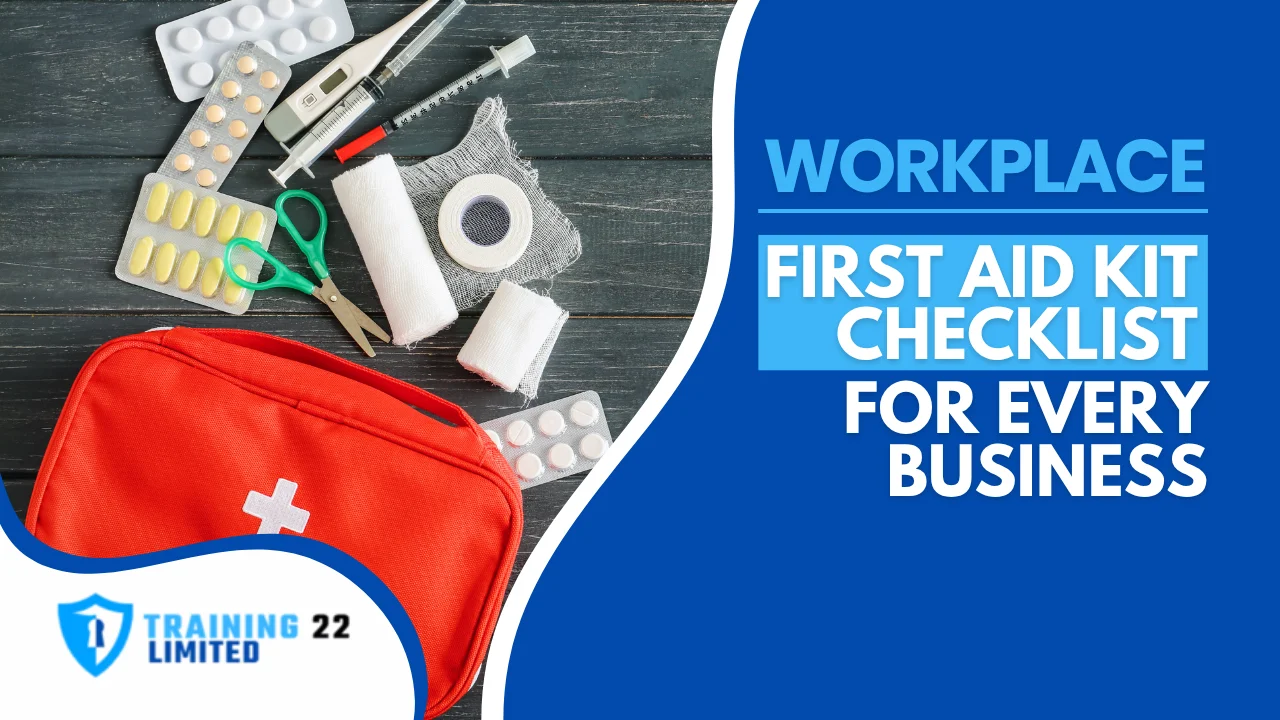
According to the Department for Education, a basic first aid kit for travel should include:
- General first aid guidance
- Six sterile adhesive dressings
- One large sterile dressing
- Two sterile triangular bandages
- Two safety pins
- Moist cleansing wipes
- Two pairs of disposable gloves
This list is a starting point, not a one-size-fits-all for every trip.
Your trip checklist may also need to include:
- An appropriate first aid kit
- Emergency medicines for students
- Individual Healthcare Plans
- Parent or carer contact details
- School emergency contacts
- Destination contact information
- Charged mobile phones
- Portable chargers as needed
- Staff information on student medical needs
- Protective equipment
- Incident recording documents
- Backup travel details
Medication should not be stored in the first aid kit. The Department for Education states that medication needs a separate container.
Check Your Equipment Before Leaving
Having a kit is not the same as having a ready kit. Before departure, the responsible person should verify that:
- All required items are present
- Packaging is intact
- Items are safe to use
- Emergency medicines are available
- Medicines are stored correctly
- Staff know who has what
- Equipment is accessible
Do not store emergency supplies under luggage where they are hard to reach.
Make Sure the Right First Aid Skills Travel With the Group
Carrying first aid equipment is just one part of handling medical emergencies on school trips. Someone needs to recognise problems and react properly.
According to the Department for Education, qualified first aiders must complete proper training and hold a valid first aid certificate. They should provide quick help for common injuries and illnesses during school trips and call for professional medical assistance when needed.
Schools should assess their first aid needs based on the specific group and activity, rather than just assigning one staff member for all situations.
Training should match the students and their environment. For staff who often work with younger children, having paediatric first aid knowledge boosts confidence and readiness.
Training 22’s paediatric first aid course is useful for those working with children and who need to know how to handle common emergencies. Schools in London may also want to consider emergency paediatric first aid courses that focus on urgent response skills for younger kids.
Such courses can help staff learn practical skills for emergencies when a child’s condition worsens. However, training does not replace school procedures or specific medical advice; it helps staff assess emergencies and provide immediate care while seeking professional help.
Specific Requirements for Early Years Outings
For early years settings in England, there are added requirements. The Department for Education states that at least one person with a current paediatric first aid certificate must be available when children are present and when they go on outings. This certificate must meet the Early Years Foundation Stage (EYFS) criteria.
So, first aid staffing should not be an afterthought when planning outings.
Plan Carefully for Asthma, Allergies, Epilepsy, Diabetes and Other Conditions
Some students have medical issues that school staff manage well. However, trips can bring new challenges and triggers. This makes careful planning crucial for handling medical emergencies during school trips.
For example, changes may include:
- more physical activity;
- different meal times;
- new foods;
- altered sleep routines;
- temperature changes;
- exposure to animals or plants;
- longer times without usual facilities;
- increased excitement or stress;
- difficulties in getting medication quickly.
Staff should follow each student’s medical plans and professional advice instead of trying to improvise treatment.
Special attention should be given to allergy planning. New guidelines on Allergy Safety in Schools were released in England on July 6, 2026. These guidelines cover allergy policies, staff training, Individual Healthcare Plans, and lessons from past incidents.
When a student with allergies goes on a trip, planning should consider:
- known allergens;
- food arrangements;
- emergency medications;
- who is trained to help;
- where to keep medicines;
- how to recognise emergency symptoms;
- communication with food providers;
- travel arrangements;
- backup plans if things change.
Staff should not assume that a venue’s food is safe just because dietary needs were shared beforehand.
Emergency medications must always be accessible. Medicine that can’t be reached in an emergency won’t help. The Department for Education states that some students may need life-saving medications listed in their Individual Healthcare Plans. Some medications also require trained staff to give them.
So, schools must have clear plans for transporting, storing, and accessing medications safely during trips.
Emergency First Aid Procedures for Teachers: What Happens When Someone Becomes Unwell?
In an emergency, staff must stay calm and organised. The treatment depends on the situation and the person involved. Teachers should follow current first aid training, the school’s emergency policy, and any specific healthcare instructions for students.
Make the Situation Safe
Before helping, staff should check for dangers like:
- moving traffic
- water
- fire
- unstable ground
- machinery
- electrical hazards
- falling objects
- unsafe crowd behaviour
Staff should not rush into dangerous situations without assessing them first.
Assess the Casualty
A trained responder should evaluate the injured person based on their first aid training. If the situation seems serious or life-threatening, call for emergency help immediately. In the UK, dial 999 or 112 and follow the operator’s instructions.
Use Healthcare Information
If the injured person is a student with a pre-existing condition, refer to their emergency instructions or Individual Healthcare Plan. Staff should know:
- symptoms that indicate an emergency
- what emergency medication might be needed
- who is trained to help
- when to call for emergency services
- who else needs to be notified
Don’t waste time searching for documents when urgent help is required.
Allocate Supervision
While one staff member helps the injured person, another should keep an eye on the other students. They may be scared or curious, so keeping them gathered allows the first aider and responders to focus on the casualty.
Know When to Call 999 Rather Than Trying to Continue the Trip
Recognising when to call for professional medical help is crucial during school trips. Teachers aren’t expected to diagnose serious health issues. If someone’s life may be in danger, don’t wait to call for help.
Dial 999 or 112 for serious medical emergencies. Some examples include a person who:
- Isn’t breathing normally
- Is unconscious and cannot be woken
- Might have a severe allergic reaction
- Is having serious breathing problems
- Has a serious head injury
- Is bleeding heavily and won’t stop
- Has a potentially serious traumatic injury
- Is having a prolonged seizure as per their care plan
- Shows other life-threatening signs
Staff must follow their training, school procedures, and the pupil’s healthcare instructions. Always stay with the child and don’t send them away alone.
According to guidance from the Department for Education, if a child needs to go to the hospital, staff should stay with them until a parent arrives or accompany them in the ambulance. Schools should also plan how to supervise the rest of the group if one staff member leaves. This is especially important for trips with a small team.
Communication Can Make or Break an Emergency Response
Even great first aid plans can fail without good communication. That’s why emergency planning for school trips should include clear communication steps, both inside and outside the school.
The Department for Education recommends that schools create a communication plan for emergencies and regular check-ins. Staff should know who to contact.
A simple chain might include:
- Emergency services
- School emergency contact
- Parents or guardians
- The venue or activity provider
- Other important people
Schools need to decide the order of contacts in their emergency plans. Having one communication leader can help avoid mixed messages from different staff members.
Keep important information accessible offline. While mobile technology is helpful, trip leaders should think about what happens if:
- A phone battery dies
- There’s no signal
- Wi-Fi isn’t available
- A phone is lost or broken
Emergency information should have a secure backup to ensure it’s accessible during the trip. Personal information must be carried and accessed according to the school’s data-protection rules.
What Information Should You Give Emergency Services?
When staff call 999 or 112, clear information helps emergency services know what they need. The caller should listen carefully to the operator and answer questions accurately.
Important details to provide include:
- Exact location
- Name of the venue or landmark
- Where emergency vehicles can enter
- What happened
- Number of injured people
- Approximate age of the injured
- If the injured person is conscious
- If the injured person is breathing normally
- Known medical issues
- Any treatment already given
- Hazards affecting access
- Callback phone number
The caller should stay on the line until the operator says to hang up.
If possible, send someone to meet the ambulance. At large places like venues, parks, or museums, the ambulance may arrive at the right area but may have trouble finding the injured person quickly.
If it is safe, a staff member can meet emergency responders at a designated spot and guide them to the injured person. This part of a school trip’s emergency plan can reduce confusion.
Don’t Forget the Pupils Who Are Not Injured
In an emergency, people focus on the injured person, but the other children also need safe supervision. A strong plan for handling medical emergencies should consider all students.
Depending on the situation, students may need to:
- Move away from the area
- Stay together
- Stop an activity
- Return to their transport
- Wait with another teacher
- Go to a designated meeting point
- Receive calm, age-appropriate reassurance
Do not let students gather around the injured person, as this can block first responders and may upset them.
After the incident, think about staff ratios. For example, if three staff members are with 30 pupils and one takes an injured student to the hospital, the two remaining staff must care for 29 pupils. Is that safe, given the activity, ages, and location?
If it’s not safe, the school should have a backup plan, like getting help from another staff member or ending the activity. Good emergency planning considers both the first aid response and what happens afterwards.
Plan for Coach, Minibus and Public Transport Emergencies
Transport is often overlooked in school trip risk assessments for medical emergencies. However, students spend a lot of time travelling, and medical issues can occur due to:
- Travel sickness
- Existing health conditions
- Allergic reactions
- Breathing problems
- Injuries from sudden vehicle movements
- Illness during long trips
Staff should know where first aid supplies and student medications are located while travelling. The Department for Education advises that minibuses and larger vehicles should have clear and well-maintained first aid kits.
Accessibility is important during transport too. Don’t pack essential medications in hard-to-reach places if a student might need them quickly.
Staff should also be aware of:
- Which students carry their own medications
- Backup plans in case of emergencies
- Who has key healthcare information
- How the group will respond if the vehicle needs to stop in an emergency
Planning these details ensures that first aid for medical emergencies on school trips is more effective.
Remote and Outdoor Trips Need Additional Thinking
Visiting a city museum and a remote countryside centre poses different challenges.
For trips to remote locations, schools need to plan for:
- Access for emergency vehicles
- Mobile phone service
- Weather conditions
- Terrain
- Distance to medical facilities
- Staff training
- Specialised first aid needs
- Evacuation plans
- Extra first aid supplies
- Communication between groups
The Department for Education advises that factors like location and the need for special skills may require extra risk assessments and planning.
Don’t rely solely on the venue. A good outdoor provider may have solid emergency plans, but the school is still responsible for its own safety measures.
Before the trip, organisers should clarify:
- What first aid the provider offers
- The emergency procedures
- How to contact emergency services
- How to evacuate students
- Staff responsibilities
- How the provider’s plans align with the school’s plans
If adventure activities are involved, schools should follow relevant guidance and requirements for those activities.
Common School Trip Medical Emergency Planning Mistakes
Sometimes the biggest risks come from thinking everything is already taken care of. Here are some mistakes schools should avoid when preparing for medical emergencies during trips.
Mistake 1: Using the same risk assessment for every trip
Each trip has its own risks. A local theatre visit is not the same as a hiking trip.
Better approach: Check first aid and medical plans for each specific trip and group.
Mistake 2: Having hard-to-reach medication
Emergency medication should be easy to access for students.
Better approach: Decide who will carry the medication, where it will be stored, and what to do if the group splits up.
Mistake 3: Only one staff member knows the plan
If the only person who understands the plan gets hurt or leaves, the situation can fall apart.
Better approach: Make sure all relevant staff know their roles and what to do in emergencies.
Mistake 4: Relying solely on the venue for help
Just because the venue has first aid doesn’t mean the school shouldn’t plan.
Better approach: Clearly define responsibilities before arriving at the venue.
Mistake 5: Ignoring travel time
The journey is part of the trip.
Better approach: Have emergency plans for the transportation used, whether it’s a bus, train, or walking.
Mistake 6: Relying on the first aid kit alone
A kit can’t assess a person’s condition or call for help.
Better approach: Ensure staff training matches the trip’s first aid needs.
Mistake 7: Forgetting backup communication plans
If a plan is only on one person’s phone, it may be lost.
Better approach: Set up secure backup communication methods.
Mistake 8: Not updating medical information
A student’s medical needs may change since the last trip.
Better approach: Follow school rules for checking medical information before leaving.
A Simple School Trip First Aid Checklist for Staff
A practical checklist helps staff put policies into action.
Before the trip
Check:
- The trip is approved by the school.
- Risk assessments are done.
- Students’ medical needs are reviewed.
- Individual Healthcare Plans are noted.
- Parents or guardians have provided necessary info.
- Required medicines are ready.
- First aid arrangements are made.
- Trained staff will attend.
- The first aid kit is checked.
- Emergency contact details are ready.
- Staff know their emergency roles.
- Emergency plans at the destination are in place.
- Transport includes access to medicines and first aid.
- Communication and backup plans are set.
- Staff know the venue’s location.
- Plans are in place for group supervision if a child goes to the hospital.
During the trip
Staff should:
- Keep emergency equipment easy to reach.
- Follow the plan for medicines.
- Supervise students properly.
- Stay aware of students’ health changes.
- Act quickly on any concerns.
- Communicate with other staff when groups split up.
- Inform the trip leader if anything changes.
After an incident
Depending on school rules and the emergency type:
- Make sure medical care continues.
- Communicate with parents or guardians.
- Write down important details.
- Report the incident as per school rules.
- Keep relevant records.
- Review what happened.
- Learn lessons for future trips.
The Department for Education suggests evaluating trips afterwards to see how planning and the trip went.
Why Reviewing Incidents and Near Misses Matters
The work doesn’t end when everyone goes back to school.
An incident can show problems that aren’t obvious on paper. For example, the first aid kit might have been hard to reach on the bus. Staff might have had trouble describing their location. One team might not have had the student information they needed when groups split up.
These insights can help improve medical emergency procedures for school trips.
Ask Practical Questions
After an incident or a near miss, schools should consider questions like:
- Did staff recognise the problem quickly?
- Was first aid available?
- Was medication easy to find?
- Did everyone know their role?
- Did communication work well?
- Could emergency services find the group?
- Were other students supervised properly?
- Did staff have the necessary information?
- Were parents or carers contacted correctly?
- Does the risk assessment need updating?
- Is more staff training required?
Current allergy guidance in England stresses the importance of recording and learning from serious incidents and near misses. The goal should be to improve, not to blame.
A thoughtful review can make future school trips safer and easier to manage.
How First Aid Training Supports Safer Educational Visits
Policies create guidelines, but staff still need hands-on skills.
In an emergency, teachers and support staff must identify serious issues, assess injured individuals, give first aid, communicate clearly, and call for help. Relevant training can improve emergency first aid procedures for teachers.
A hands-on paediatric first aid course can help those working with children gain confidence in handling common emergencies.
For organisations in London, an emergency paediatric first aid course can equip staff with the skills needed for their jobs. This course may also be suitable for those needing practical emergency-response knowledge along with broader safety policies.
Training 22 offers health and safety training, including First Aid at Work Course, Emergency First Aid at Work, Paediatric First Aid, and Basic Life Support Training. Schools should choose training based on their first aid needs, student requirements, legal responsibilities, and the work environment.
Importantly, completing a course doesn’t eliminate the need for risk assessments, individual healthcare plans, emergency procedures, or professional medical support. These elements work together.
Frequently Asked Questions About Medical Emergencies on School Trips
Does every school trip need a first aider?
Schools must assess their first aid needs for each trip. The Department for Education says that first aid must be available during off-site activities, and trip leaders should evaluate what is needed before going.
What should be in a school trip medical emergency response plan?
A strong plan should detail how staff will get emergency help, provide first aid, manage specific health needs, communicate with the school and parents, supervise the group, and respond if a student needs to go to the hospital. Responsibilities should be clear before the trip starts.
Should staff carry pupils’ emergency medication?
Whether staff carry a student’s emergency medication depends on the student’s needs, school policy, parental consent, healthcare advice, and any Individual Healthcare Plan. The main goal is to store and access medications properly as agreed.
Can pupils with medical conditions go on school trips?
Having a medical condition does not automatically exclude a student from a trip. Schools should help these students participate and consider reasonable adjustments and risk-management steps.
What happens if a pupil needs to go to the hospital?
In a medical emergency, the school’s emergency plan should guide supervision and communication. Staff should stay with the student until a parent arrives or accompany them in an ambulance.
Should schools give staff access to pupil medical information?
Staff need enough information to support students safely, especially in emergencies. However, personal and medical information must be kept secure and handled according to school policy and data protection laws.
What number should staff call during a medical emergency?
In a serious emergency in the UK, call 999 or 112. Staff should clearly explain the location, the event, and the student’s condition, then follow the emergency operator’s instructions.
How often should school trip emergency plans be reviewed?
Emergency plans should be reviewed whenever circumstances change and after any incidents or lessons learnt from past trips. Specific visits may also need updated risk assessments due to different pupils, activities, destinations, or medical needs.
Preparation Turns an Emergency From Confusion Into Coordinated Action
School trips should be fun and memorable, allowing students to learn without worrying staff. Good preparation builds confidence and reduces fear.
To manage medical emergencies on school trips, it’s important to have several key elements: proper risk assessment, updated medical information, first aid supplies, trained staff, accessible medicines, clear communication, and a practical emergency plan.
Schools must remember that medical planning is unique for each situation. What works for a short trip may not suit a longer one. Each student may have different medical needs.
Preparing for medical emergencies isn’t just about filling out a form. It involves asking important questions for each trip:
- Who might need help?
- Who knows what to do?
- Where is the equipment?
- How will staff call for help?
- Who cares for the rest of the group?
- What if someone needs to go to the hospital?
When schools can confidently answer these questions, their emergency response plan becomes a reliable system for unexpected situations.
Having staff trained in first aid improves this system. Whether they take a paediatric first aid course or an emergency one, the goal is to equip them with practical skills to support school policies and professional medical help.
With careful emergency planning for trips, schools can provide great learning experiences while ensuring staff are ready to help when needed.