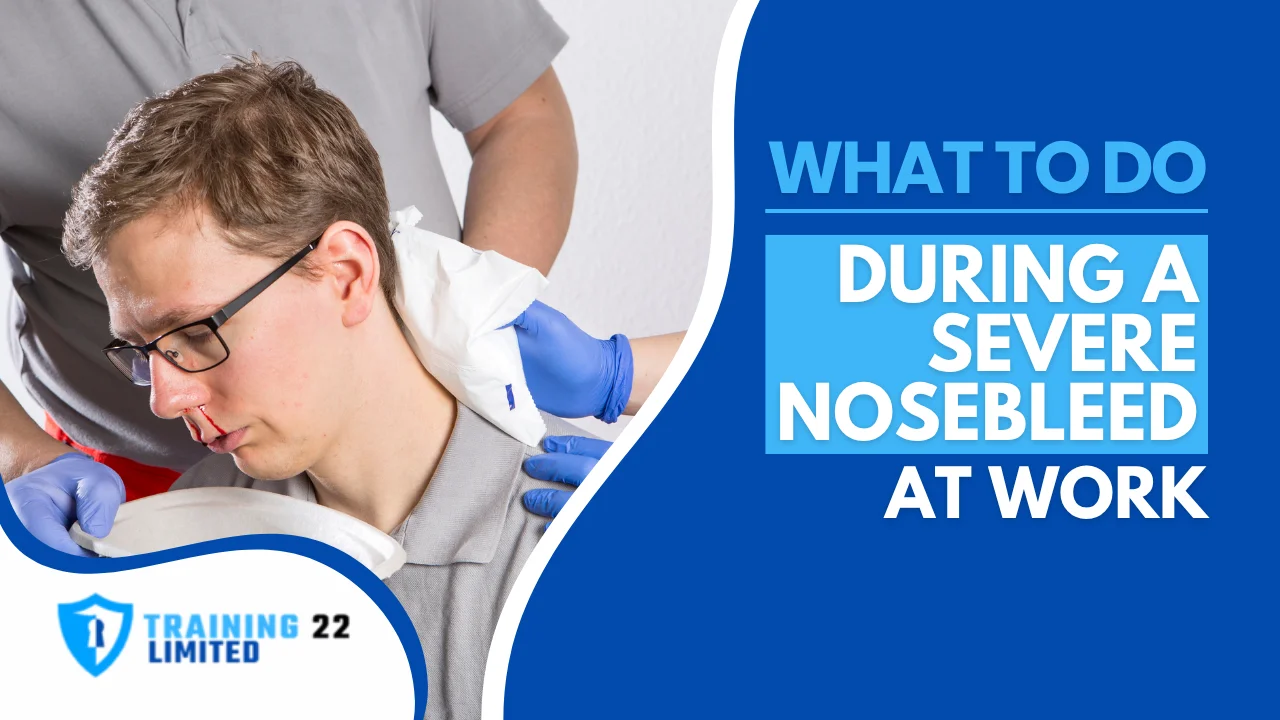
A sudden nosebleed at work can be shocking. One moment, a person is doing their job; the next, there may be a lot of blood and worried coworkers. Most nosebleeds are minor, but heavy or ongoing bleeding needs quick medical attention.
Knowing how to handle a severe nosebleed helps employees stay calm. Simple steps, like sitting the person down, leaning them forward, and applying pressure to the right spot on the nose, can really help. It’s also important for coworkers to recognise when a nosebleed needs professional medical help.
First aid for severe nosebleeds at work includes using the right techniques, spotting warning signs, avoiding common mistakes, and providing good aftercare. While first aid information raises awareness, it does not replace hands-on training or medical advice.
When a Nosebleed at Work Becomes More Than a Minor Problem
Nosebleeds are common and usually not serious. They occur when small blood vessels in the nose get damaged. Common causes include dry air, picking the nose, blowing it too hard, or injury. Some people, like older adults, pregnant women, and those with high blood pressure, may be more likely to have nosebleeds. Certain medications that affect blood clotting can also increase the risk.
Visible blood can make it hard to judge the seriousness of a nosebleed. A little blood can spread quickly and look alarming. However, if bleeding is heavy and the person feels weak, dizzy, vomits blood, or has trouble breathing, it shouldn’t just be ignored as a minor issue.
Effective first aid for severe nosebleeds involves more than stopping the bleeding. A first aider should check the person’s overall condition, see if an injury caused the bleeding, and look for signs that need urgent medical help.
According to NHS advice, go to A&E if: a nosebleed lasts more than 10 to 15 minutes, is very heavy, causes vomiting from swallowed blood, follows a head injury, or is accompanied by weakness, dizziness, or breathing difficulties.
The Immediate Priority: Sit Down, Lean Forward and Stay Calm
If someone at work has a severe nosebleed, first help them sit down and lean slightly forward. Their head should tilt forward, not backward.
This position is important. Tilting the head backward can cause blood to go down the throat, which may block the airway. Instead, they should lean forward and breathe through their mouth.
Before giving help, move them away from dangers like machines, hot surfaces, or busy areas. For example, a dizzy person near equipment is at risk of falling or getting hurt. Likewise, if someone is working at height, make sure they are in a safe spot before treating them.
How you communicate matters too. Speak clearly and calmly. Nosebleeds can look scary, and panic can make it hard for the person to follow your instructions. Reassure them that you are there to help and check how they feel.
Here’s a simple guide:
- Sit the person down.
- Ask them to lean forward.
- Keep their mouth open for breathing.
- Do not let them tilt their head backward.
- Keep them away from hazards.
- Reassure them while you assess the situation.
These steps create a safer approach to managing a severe nosebleed at work.
Pinch the Correct Part of the Nose Firmly
Once the person is seated and leaning forward, the next step is to apply direct pressure. Ask them to pinch the soft part of their nose above the nostrils and breathe through their mouth while keeping the pressure on.
NHS recommends pinching the nose for 10 to 15 minutes. St John Ambulance suggests doing the same for the first 10 minutes.
This step is crucial for a heavy nosebleed because it helps the damaged blood vessels clot. Frequently checking if the bleeding has stopped can disturb the clot and restart the bleeding.
Use a clock or phone timer to avoid guessing. Ten minutes can feel long during a nosebleed, and people often release pressure too soon after only two or three minutes.
St John Ambulance says after 10 minutes, you can release the pressure. If the bleeding continues, pinch the nose again for two more 10-minute periods. If the bleeding is severe or goes on for more than 30 minutes, call 999 or 112.
Keep these points in mind:
- Firm: Apply enough pressure to compress the soft part of the nose.
- Continuous: Avoid checking repeatedly if the bleeding has stopped.
- Correctly positioned: Pinch the soft part, not the hard bridge of the nose.
- Timed: Track how long the bleeding lasts to make informed decisions.
Understanding this technique is key to stopping a severe nosebleed safely.
Use Tissues for Blood, Not as Nose Packing
A clean tissue can help catch blood from a nosebleed, especially if the person leans forward. St John Ambulance advises giving a clean tissue to the person bleeding.
Catching blood is not the same as pushing tissues deep into the nostril. Some people think they should pack the nose tightly. In a workplace first aid situation, the focus should be on proper positioning and applying pressure to the soft part of the nose unless told otherwise by a healthcare professional.
Avoiding extra handling of the nose is important because it can disrupt clot formation. Keep it simple: sit forward, pinch the nose, breathe through the mouth, and keep an eye on the person.
First aiders should practise good hygiene when dealing with blood. Use disposable gloves when possible and avoid touching another person’s blood. Dispose of used materials according to workplace rules and wash hands thoroughly afterwards.
Being aware of hygiene is part of responsible first aid for bleeding emergencies, especially in workplaces where multiple employees may respond to incidents.
Do Not Tilt the Person’s Head Back
A common piece of bad advice for nosebleeds is to “put your head back.” This advice has been around for a long time, but modern first aid suggests doing the opposite.
St John Ambulance recommends that a person with a nosebleed should sit down and lean forward. Leaning back can cause blood to flow down the throat and block the airway. The NHS agrees and advises sitting down, tilting the head forward, and keeping the mouth open.
One key mistake to avoid is telling someone to look up or lie down during a nosebleed.
Other mistakes include:
- Releasing pressure every minute to check the nose.
- Pinching only the hard part of the nose instead of the soft part.
- Asking someone to blow their nose right after the bleed.
- Telling them to return to heavy physical work too soon.
- Ignoring signs of dizziness, weakness, or breathing trouble.
- Thinking all nosebleeds can be managed at work without help.
- Letting someone who needs emergency care drive themselves.
- Treating nosebleeds from a head injury like a regular nosebleed.
Avoiding these mistakes is just as important as knowing the correct technique. Good first aid often means preventing well-meaning actions from making things worse.
When a Nosebleed Requires Emergency Help
It can be hard to know when first aid for a nosebleed isn’t enough. A small, quick nosebleed is different from heavy bleeding that won’t stop, even with pressure.
The NHS advises people to go to A&E if their nosebleed lasts longer than 10 to 15 minutes, if the bleeding is heavy, if they swallow a lot of blood and vomit, if the bleeding started after a head injury, if they feel weak or dizzy, or if they have trouble breathing. They should not drive themselves; someone else should drive them, or they should call for an ambulance.
St John Ambulance recommends calling 999 or 112 for severe bleeding or if it lasts more than 30 minutes. These guidelines can work together. Someone might need to go to A&E before the 30 minutes, especially if they show concerning symptoms. It’s crucial to call an ambulance if the situation is serious, if the person’s condition worsens, or if it isn’t safe to transport them any other way.
Look for urgent medical help if you notice these signs:
- Excessive bleeding
- Bleeding continues despite applying pressure
- Weakness or dizziness
- Difficulty breathing
- Vomiting after swallowing a lot of blood
- A nosebleed after a head injury
- A noticeable decline in the person’s condition
Deciding when to seek emergency help for a nosebleed involves more than just timing. Both the amount of bleeding, the cause of the injury, and the person’s overall condition are important.
What If the Nosebleed Started After a Workplace Accident?
Context affects how we respond. If a person’s nose bleeds while sitting at a desk, it’s usually simple. But if the bleeding happens after they fall, hit something, or experience another workplace accident, we need to think about other injuries that could have occurred.
NHS guidance says to go to A&E if a nosebleed starts after a head injury. Don’t just think about the nose; remember to consider what caused the bleeding.
For example, imagine a falling object strikes a warehouse employee. Their nose begins bleeding heavily, and they also seem confused or unsteady. Simply pinching their nose and sending them back to work would clearly be inappropriate. Their overall condition and possible head injury need urgent attention.
If an employee has facial injuries, don’t touch the injured area. Ensure their safety, seek proper medical help, and follow emergency services’ instructions.
This wider assessment is crucial for first aid in severe nosebleeds. Good first aid focuses on the person, not just the obvious symptom.
What If the Person Takes Blood-Thinning Medication?
When someone has a nosebleed, medication can be important. The NHS suggests that if a person bleeds while taking blood-thinning medications, like warfarin, they should see a GP. This also applies to people with blood clotting issues, like haemophilia.
A workplace first aider doesn’t need to diagnose the bleeding or manage someone else’s medication. They should focus on providing proper first aid, recognizing warning signs, and escalating the situation when necessary.
If the employee can talk, sharing information about medications or clotting conditions can help healthcare professionals. However, keep this information private and only ask for what’s needed in an emergency.
The HSE advises that employees can inform employers about health issues that might affect first aid planning. If someone needs urgent medication for a pre-existing condition, they should notify their employer so that suitable measures can be taken.
This highlights that workplace first aid should be tailored to the specific needs and risks of the workforce, rather than depending only on a basic first aid kit.
After the Bleeding Stops: Don’t Rush Back to Work
Stopping the bleeding doesn’t mean a person should jump up and keep working right away.
St John Ambulance recommends that the person lean forward while you clean their nose with lukewarm water. After that, they should rest and avoid any hard activities or blowing their nose, which could disrupt the clot.
The NHS provides extra advice for the first 24 hours after a nosebleed.
They suggest avoiding:
- Blowing the nose
- Picking the nose
- Hot drinks
- Alcohol
- Heavy lifting
- Hard exercise
- Picking scabs
- Lying flat
This advice is important for the workplace. Someone whose job involves heavy lifting or physical activities may need to stop these tasks instead of going back to work right away.
Employers or supervisors should think about whether the employee needs to rest, change their duties, or get medical advice. First aid should not be used to decide if someone is okay to work.
Severe Nosebleed Response: A Simple Workplace Action Plan
In stressful situations, it’s hard to remember long explanations. Workplaces need a clear, simple process that employees and trained first aiders can easily follow.
Here’s a quick guide on how to handle a severe nosebleed at work:
Step 1: Make it safe
Move the person away from any dangers if you can. Ask them to sit down.
Step 2: Lean forward
Have them tilt their head forward, not backward.
Step 3: Pinch the nose
Press firmly on the soft part of the nose, just above the nostrils.
Step 4: Breathe through the mouth
Encourage them to breathe calmly through their mouth while keeping pressure on the nose.
Step 5: Time the bleeding
Keep applying pressure for 10 to 15 minutes. Don’t check the nose repeatedly. If bleeding lasts longer than this, seek medical help.
Step 6: Check their condition
Watch for heavy bleeding, weakness, dizziness, vomiting, breathing issues, or signs of a head injury.
Step 7: Call for help if needed
If you see warning signs, get urgent medical help. For severe bleeding or bleeding that’s longer than 30 minutes, call 999 or 112.
Step 8: Aftercare
Once the bleeding stops, let the person rest and avoid doing anything that might disrupt the clot.
This process gives clear steps for dealing with a severe nosebleed at work while allowing for judgement if the situation worsens.
Why Every Workplace Needs Clear First Aid Arrangements
First aid is important in all work environments, not just factories or construction sites. People can get hurt or sick in offices, shops, restaurants, warehouses, schools, salons, and more.
The Health and Safety Executive says employers must ensure workers can get immediate help if they are injured or ill. Workplaces must have a well-stocked first aid kit, a designated person for first aid, and information for employees about these arrangements.
Employers should evaluate their first aid needs. This might mean having enough trained first aiders, rather than just the minimum required.
For a nosebleed emergency, employees should know:
- Who the workplace first aider is.
- Where first aid supplies are.
- How to call emergency services.
- Who will meet an ambulance at the entrance.
- How to report incidents internally.
- What to do if the usual first aider is not available.
Knowing these details can save time during a serious nosebleed emergency at work.
Training Turns First Aid Knowledge Into Practical Confidence
Reading the right steps is helpful, but responding to a real emergency can feel different. Blood, noise, worried coworkers, and uncertainty about calling an ambulance can create a lot of stress.
Practical first aid training teaches people how to assess a casualty, handle emergencies, and understand their role in workplace first aid. Training 22’s emergency first aid at work course boosts employee confidence for those who may need to act quickly if someone gets hurt or sick.
Businesses in London might consider an emergency first aid course while reviewing their workplace safety and checking if their current first aid setup meets their needs.
A one-day first aid course can provide clear training for employees on immediate first aid situations at work, as long as it fits the organization’s training goals.
However, training should be part of a larger system. Employers also need the right equipment, responsible personnel, clear communication, and first aid plans suited to their workplace. HSE guidelines stress that first aid provisions should match the specific needs of each workplace.
Nosebleed First Aid Mistakes to Avoid in the Workplace
Workplace emergencies often attract many helpers, each giving different advice. This can create confusion, especially with common misconceptions about nosebleeds. Having a consistent first aid method helps avoid interference with proper care.
Here are some common nosebleed mistakes to avoid:
- Tilting the head back: Keep the person leaning forward.
- Checking too often: Apply firm pressure for several minutes without lifting your fingers.
- Pinching the wrong spot: Squeeze just above the nostrils, not the bridge of the nose.
- Rushing back to work: Allow time for rest and consider follow-up care.
- Ignoring other symptoms: Dizziness, weakness, breathing issues, or vomiting can signal a more serious problem.
- Overlooking the cause: A nosebleed after a head injury needs more attention than a simple one.
- Driving alone to the hospital: If someone needs emergency care for a nosebleed, they should go with someone else.
- Thinking the issue ends when the bleeding stops: Frequent nosebleeds or those in people taking blood thinners might require medical advice.
Understanding what not to do is crucial for first aid during nosebleeds in the workplace.
Preparing Managers and Employees Before an Emergency Happens
The simplest workplace emergency to handle is one that is planned ahead of time. While we can’t predict when a nosebleed will happen, organizations can ensure their employees know the first aid procedures.
According to HSE guidelines, employers should assess their first aid needs and provide suitable resources based on their workplace. Employees must also be informed about these arrangements.
When reviewing the workplace, consider factors like the number of staff, work patterns, potential hazards, remote areas, and availability of trained first aiders. The goal is to ensure someone knows how to respond when an incident occurs without overcomplicating things.
A helpful checklist for workplace readiness could include:
- Confirming where first aid kits are located.
- Regularly checking supplies.
- Identifying trained first aiders.
- Making first aid information visible to all employees.
- Ensuring coverage during all shifts.
- Setting up a simple emergency communication plan.
- Reviewing specific workplace hazards.
- Keeping records of incidents.
- Refreshing training for employees as needed.
The HSE states that an appointed person can manage first aid arrangements, including care of equipment and calling emergency services. This person should always be available when employees are at work.
Being prepared is important. It helps staff avoid having to figure out what to do in a crisis while someone needs immediate help.
Frequently Asked Questions About Severe Nosebleeds at Work
How long should you pinch a nose during a nosebleed?
The NHS says to pinch the nose just above the nostrils for 10 to 15 minutes. Sit forward and breathe through your mouth. Don’t check the bleeding every minute.
Should you put your head backwards during a nosebleed?
No. Both NHS and St John Ambulance recommend leaning forward. Tilting your head back can make blood go towards your throat.
Should a person lie down during a heavy nosebleed?
If someone is conscious with a nosebleed, they should sit down and lean forward. After the bleeding stops, the NHS suggests not lying flat for 24 hours.
When does a nosebleed need A&E treatment?
Go to A&E if the bleeding lasts longer than 10 to 15 minutes, is heavy, causes vomiting from swallowed blood, follows a head injury, or comes with weakness, dizziness, or trouble breathing.
When should you call 999 for a nosebleed?
Call 999 or 112 if the bleeding is severe or lasts more than 30 minutes. Also call if the person’s condition is getting worse, they have serious breathing difficulties, or if it’s unsafe to move them.
Can someone return to work immediately after a nosebleed?
It depends on the situation and job. After bleeding stops, resting is a good idea. St John Ambulance advises against strenuous activity, and the NHS suggests avoiding heavy lifting or hard exercise for 24 hours, especially for manual jobs.
Should ice be used for a nosebleed?
The NHS says using an ice pack or frozen peas on the nose may help reduce blood flow, but the evidence isn’t strong. Pressing and proper positioning are the most important steps.
What if the employee keeps getting nosebleeds?
The NHS recommends seeing a GP for frequent nosebleeds. It’s also best to get medical advice if there are signs of anaemia, if the person takes blood-thinning medication, or has a condition affecting blood clotting.
A Realistic Workplace Example
An employee gets a heavy nosebleed while moving stock in a storeroom. A colleague sees the blood and takes the employee to a safe chair away from equipment instead of telling them to lean back.
The employee leans forward, breathes through their mouth, and pinches their nose. Someone checks the time instead of asking them to stop pinching. Another colleague finds the workplace first aider and keeps others away.
After 15 minutes, the bleeding hasn’t stopped, and the employee feels dizzy. The team realises that first aid alone isn’t enough. NHS guidance says ongoing bleeding, excessive blood loss, and dizziness require urgent medical attention.
The key lesson is that the team learnt to handle a severe nosebleed using three important skills:
- Giving proper first aid.
- Monitoring the employee’s condition.
- Knowing when to call for professional help.
This approach makes workplace responses safer and more effective.
Why Calm, Simple First Aid Usually Works Better Than Complicated Advice
When an incident looks serious, people often feel they should do more. However, effective first aid usually involves a few simple steps done correctly.
For a nosebleed, it’s important to position the person properly, apply pressure for a sufficient time, monitor their condition, and get help if needed. Adding unnecessary treatments or constantly touching the bleeding area can distract from these key steps.
Workplace first aid training should focus on easy-to-remember actions. Employees don’t need to become medical experts. They should know their limits, provide immediate help within their abilities, and call for professional help when necessary.
The HSE’s workplace guidelines emphasise that employers must supply the right equipment and support so employees can get immediate care if they are injured or unwell at work.
Know the Steps and Know When to Escalate
A bad nosebleed can get attention at work, but it’s important to respond calmly. Sit the person down, have them lean forward, breathe through their mouth, and pinch the soft part of their nose firmly for the recommended time.
Don’t just focus on stopping the bleeding. Pay attention to how long it lasts, if it’s heavy, if there’s an injury, and if the person feels weak, dizzy, or unwell.
Know when to get help. The NHS recommends going to A&E for bleeding that won’t stop or is excessive. Call 999 or 112 if the bleeding lasts longer than 30 minutes.
Employers should be ready for emergencies before they happen. Having the right equipment, clear procedures, and trained staff can help when someone needs assistance.
Training 22 offers first aid training for businesses and individuals to learn emergency response skills. Gaining these skills before an emergency helps employees know what to do and when to seek professional help.