A workplace first aid kit is often forgotten. It sits quietly on a wall, in a cupboard, or at reception, with most people hoping they never have to use it. However, when someone gets a cut, burn, or something in their eye, the quality and accessibility of that kit become important.
Having a first aid kit is more than just buying a green box with band-aids. Employers need to consider workplace hazards, the number of employees, work patterns, locations, and possible incidents. That’s why creating a checklist for a useful first aid kit starts with an assessment instead of shopping.
For UK employers, it’s important to note that the Health and Safety Executive (HSE) does not require a specific list of items for every first aid kit. Instead, employers should figure out their needs through a first-aid assessment. The HSE does provide a suggested minimum stock for low-hazard workplaces.
Before You Buy Anything: Start With Your First-Aid Needs Assessment
Before making a first aid kit checklist, think about what might happen in your workplace. An office has different risks than a warehouse, construction site, kitchen, or workshop. Just copying another company’s kit may lead to having too much of the wrong supplies and not enough of what your workers really need.
Your assessment should consider factors like the type of work, hazards, workforce size, work patterns, accident history, and whether employees travel or work remotely. Make sure your plan works even when staff changes, such as during shifts or vacations.
Instead of just asking, “How many band-aids should we buy?” ask the following:
- What injuries might happen here?
- How many people might need first aid?
- How fast can emergency help get here?
- Are employees on different floors, buildings, or sites?
- Do staff travel or work alone?
- Are there specific risks needing extra first aid supplies?
- Who will check and refill the kit?
- Who is in charge when first aid is needed?
This risk-based approach is important because the Health and Safety Executive (HSE) says there isn’t a universal list for first aid kit contents. The kit should match the results of your needs assessment.
So, use any general first aid requirements list as a starting point, not as a replacement for assessing your specific business needs.
The Core Workplace First Aid Kit Contents Checklist
HSE offers a basic list for first aid kits in low-risk workplaces. This helps employers know what to include.
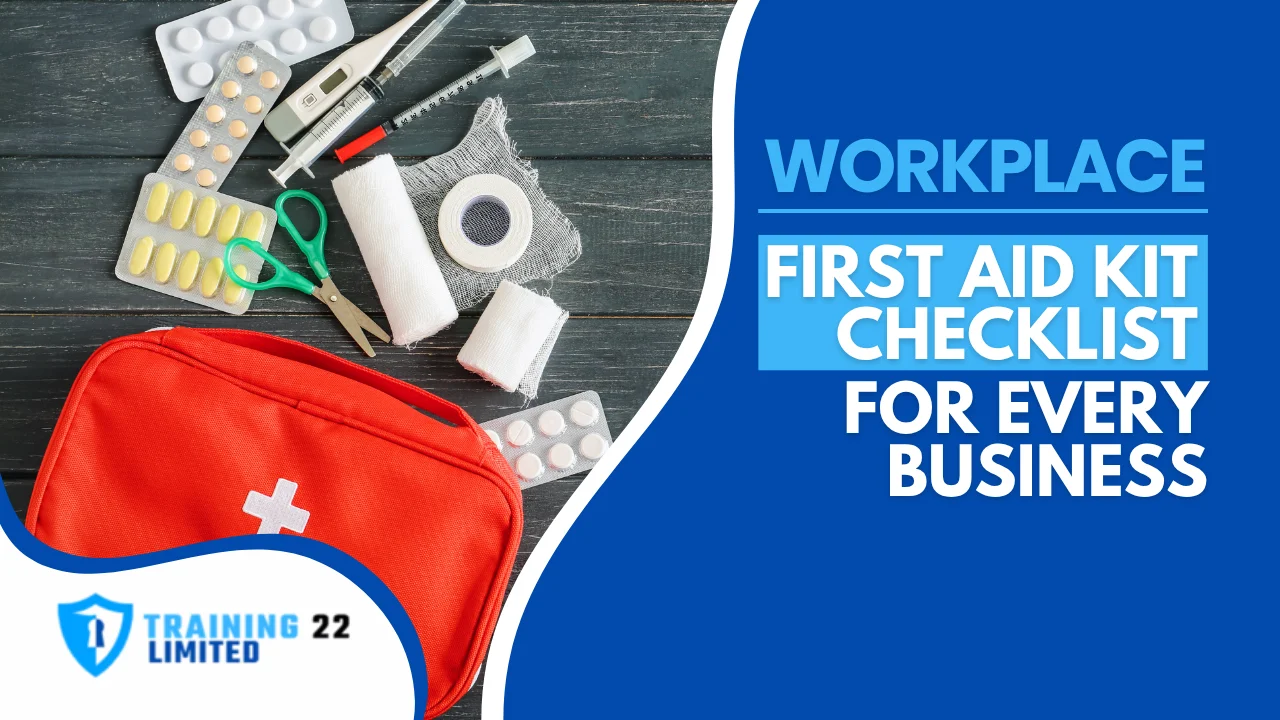
According to HSE, a low-hazard workplace kit should have:
- A leaflet on general first aid
- 20 sterile plasters in different sizes
- Two sterile eye pads
- Two sterile triangular bandages
- Six safety pins
- Two large sterile wound dressings
- Six medium sterile wound dressings
- At least three pairs of disposable gloves
HSE notes that this is just a suggested list. The right supplies depend on your specific needs.
This distinction helps you make a checklist for your workplace first aid kit. An office with 12 employees might need different supplies than a busy distribution centre with machinery and multiple shifts.
You can also select a first aid kit based on BS 8599, which outlines standards for various types of kits. The latest version is BS 8599-1:2019+A1:2026. However, you still need to consider your workplace’s specific hazards.
Ultimately, a good first aid kit is not about having the most items; it’s about having the right supplies readily available.
Dressings, Plasters and Bandages: Your Everyday First Aid Essentials
Minor cuts and wounds are common in many businesses. That’s why sterile dressings and plasters are essential first aid supplies for every workplace.
You should have individually wrapped sterile plasters in various sizes. Different injuries occur on various body parts, so it’s impractical to have only one small size. It’s also wise to consider hypoallergenic options.
Sterile wound dressings are important for larger wounds that a small plaster can’t cover. Health and Safety Executive (HSE) suggests having medium and large sterile, unmedicated wound dressings in your first aid kit.
Triangular bandages are also useful, and safety pins are handy for securing bandages when needed.
When checking your first aid kit, look at the packaging. Don’t keep opened, contaminated, or damaged items just because they are on the inventory list. A monthly check that says “dressings: yes” means nothing if the dressings are unusable. The goal is always to have usable supplies, not just to meet numbers.
Disposable Gloves and Hygiene Supplies Matter More Than You Think
Disposable gloves often get overlooked in first aid kits because they are small. Yet, they are essential for preventing infections during first aid. The HSE recommends having at least three pairs of disposable gloves in basic low-hazard kits.
Choosing the Right Gloves
When selecting gloves, businesses should choose the right type for their needs. They should also consider allergies and materials instead of just buying the cheapest option.
Additional Hygiene Supplies
Your assessment might show that other hygiene supplies are needed. Depending on your workplace, this could include cleansing wipes, waste bags, or other items for safe and clean first aid.
Stocking the First Aid Kit
Employers should remember that first aid supplies should help both the injured person and the responder. For example, if someone has a bleeding wound, having the right dressing is crucial. The responder also needs to avoid direct contact with blood and fluids, making gloves important. Gloves should not be buried at the bottom of the kit.
Handling Used Materials
Used first aid supplies must be handled and disposed of properly. A well-organised kit ensures a safer response before, during, and after any incident.
Eye Injuries: Does Your Workplace Need More Than Eye Pads?
HSE suggests including two sterile eye pads in a low-hazard first aid kit. However, employers shouldn’t assume this is enough for every workplace.
Think about what substances or processes workers might encounter. Different environments, like workshops or labs, have very different eye injury risks compared to an office. If a risk assessment reveals specific hazards, you may need additional first aid supplies or facilities.
A general first aid supplies list can’t replace specific workplace planning. Office workers may face minor dust irritation, while others could encounter substances that cause serious eye injuries. The emergency response and equipment should match the actual risks.
Location is also important. Emergency equipment won’t help if it’s locked away in a hard-to-reach area.
When reviewing your first aid kit, consider not just what should be included but also where to place specialised first aid facilities. Being ready for emergencies means having easy access to the right supplies.
What Should Be in a First Aid Kit for an Office Workplace?
Many offices are generally safe, but “low hazard” doesn’t mean “no risk.” People can trip, fall, cut themselves, get sick, or face unexpected issues.
So, it’s important to choose the right items for office first aid kits. The HSE’s recommended list for low-hazard workplaces is a good starting point, but your office may need more items based on its size, layout, or operations.
A practical review of an office first aid kit should include:
- Sterile adhesive plasters in different sizes
- Sterile eye pads
- Medium and large sterile wound dressings
- Triangular bandages
- Safety pins
- Disposable gloves
- Current first aid guidelines
- Any extra items based on specific needs
However, having the right items isn’t enough. For example, a company with 150 employees spread over five floors shouldn’t just have one small first aid box on the ground floor. Even if it’s well-stocked, it may not meet the needs of the entire workplace.
Consider how quickly supplies can be accessed from various areas. Larger offices and multi-floor buildings might need multiple first aid stations.
Remote and hybrid work setups also affect planning. Employees who travel often may need separate first aid considerations beyond what’s available at the head office.
Workshops, Warehouses and Higher-Risk Workplaces Need a Closer Look
A general workplace checklist is less effective when there are specific risks. For instance, a warehouse may have risks from lifting, vehicles, loading, shelves, and machines. A workshop might have tools, sharp items, heat, or chemicals, leading to different injury risks.
In these cases, the first aid supplies needed should come from a detailed assessment of needs. Just buying a standard first aid box for an office won’t ensure proper first aid.
Consider these questions:
- Could workers get cuts or wounds?
- Is there a risk of burns?
- Could substances harm eyes or skin?
- Are employees near machinery?
- Are there remote areas on site?
- Would emergency services take longer to reach some workers?
- Is there a risk of life-threatening bleeding?
- Do people work alone or away from the main building?
The HSE’s updated first aid guidance emphasises the need to address life-threatening bleeding if identified as a risk. The 2024 update to the HSE’s L74 guidance changed the term “catastrophic bleeding” and provided more information on this risk.
If an employer finds a specific risk, they may need more equipment and appropriate training. Special equipment should not be added just for show; those who use it must know how to respond correctly.
First aid supplies, workplace procedures, and proper training should work together.
Should You Keep Painkillers or Other Medicines in the Workplace First Aid Box?
A common question about workplace first aid kits is whether to include medication. Some businesses think they should stock painkillers or antihistamines for employee use.
However, HSE advises against keeping tablets and medicines in the first aid kit. This doesn’t mean businesses can’t have separate medicine arrangements; it just means the first aid box shouldn’t become a shared medicine cabinet.
There are practical issues to consider. Employees might have allergies, medical conditions, or prescriptions that others don’t know about. A first aider is not the same as a doctor or pharmacist.
So, don’t fill the kit with items just because they seem useful. This advice also applies to unnecessary gadgets and supplies. A kit full of unfamiliar items might look thorough, but it doesn’t necessarily mean the workplace is better prepared.
Your business first aid kit should focus on essential supplies identified through a first aid needs assessment.
First Aid Kits for Travelling, Remote and Mobile Workers
Not every employee works inside the main office. Engineers, surveyors, sales staff, delivery teams, technicians, cleaners, and other mobile workers often spend time away from their usual base.
When assessing first aid supplies for your workplace, include these employees.
The Health and Safety Executive (HSE) does not provide a mandatory list for travelling first aid kits, but it suggests a basic kit might include:
- General first aid guidance
- Six sterile, individually wrapped plasters
- Two triangular bandages
- Two safety pins
- One large sterile dressing
- Individually wrapped cleansing wipes
- Two pairs of disposable gloves
This list is a guideline. The right supplies depend on the person’s tasks and location.
For instance, a worker visiting central London offices has different needs than an engineer working alone in remote areas. Employers should consider travel time, working conditions, communication, known hazards, and how quickly help can arrive.
Don’t assume that a small kit in a vehicle covers all first aid needs for mobile workers. Emergency communication and training are also crucial.
The Forgotten Job: Checking Expiry Dates and Replacing Used Supplies
Buying a first aid kit starts, but does not end, the process.
Many workplaces forget to check and restock their first aid kits. Bandages get used and not replaced. Dressings expire. Gloves go missing, and packaging gets damaged. Eventually, the kit may look good on the wall but won’t have what employees need.
To keep a first aid kit reliable, make a checklist for regular inspections.
Check the following during inspections:
- Is the kit in its correct location?
- Is the box easy to identify?
- Can employees access it quickly?
- Are all necessary supplies present?
- Have any items been used?
- Is the sterile packaging intact?
- Are the expiry dates current or approaching?
- Is extra stock stored properly?
- Do the kit’s contents match current workplace risks?
- Does the responsible person know what needs to be ordered?
How often you inspect the kit depends on your workplace.
A kit used often needs more frequent checks than one in a small office. It’s also wise to inspect the kit after any incident when it is opened. Don’t wait for the next scheduled monthly check to find missing items.
Every workplace needs first aid supplies ready when emergencies occur.
Make Someone Responsible for the First Aid Arrangements
A first aid kit should not be everyone’s responsibility, as this can lead to no one taking charge.
If an employer’s first-aid assessment shows that a designated first aider is not needed, they must appoint someone to manage first aid arrangements. This person’s duties include maintaining first aid supplies and calling emergency services when necessary.
This appointed person helps ensure first aid kits are checked, supplies are ordered, and employees know how to get help. However, they are not the same as a trained first aider. While they don’t need formal training, they could benefit from a basic first aid course.
If the assessment shows that trained first aiders are needed, employers must ensure they are available whenever necessary. Planned absences, like vacations, should be considered in these arrangements.
Businesses should inform workers about first aid plans. Employees need to know where the first aid kit is and who to contact for help. After all, a well-stocked kit is useless if no one knows where to find it.
A Full Kit Is Not a Substitute for a Trained First Aider
Equipment cannot assess a casualty, make decisions, or coordinate an emergency response — people do that.
Businesses should view their first aid kit contents as part of a broader first aid system. This system may include appointed persons, trained first aiders, emergency procedures, employee information, and the right equipment based on needs assessment.
For organizations with higher first aid needs, proper first aid training can help employees handle workplace incidents. Training 22 offers first aid training in London, including options for businesses seeking first aid courses. Employers with greater workplace risks might look for a 3-day first aid course, depending on their assessment.
It’s crucial to tailor training to the specific workplace instead of choosing a course just because another business did the same.
Emergency First Aid at Work Training may suit some workplaces, while others might need the more comprehensive First Aid at Work qualification. HSE recognises both qualifications as valid based on the first aid needs assessment.
Training and equipment must work together. A person might know how to control bleeding but still needs the right supplies nearby. Conversely, good equipment is useless if nobody knows how to use it effectively.
First Aid Kit Placement: Seconds Matter More Than Cupboard Neatness
Businesses often focus on what to include in a workplace first aid kit but forget about where to keep it. The kit should be easily accessible. This might seem obvious, but many kits end up in locked offices, behind stock, in rarely used cupboards, or at the far end of large spaces.
Think about how your workplace functions daily. If someone gets hurt in the loading area of a warehouse, how far is the nearest kit? If reception is closed during the evening, can employees still access first aid? If your company has multiple floors, is just one kit enough?
A smart approach might involve several clearly marked first aid stations instead of just one big kit. Employees must know where these supplies are located. Clear signs can help, especially for new staff, visitors, or employees from different departments.
Accessibility is important for everyone, including those working outside regular hours. Your plan should consider shift workers, cleaners, security staff, and anyone else who might be on-site when the main office team is gone.
The best first aid kit is not just well stocked; it should also be visible and easy to reach.
Does Every Workplace Need an AED?
Automated External Defibrillators (AEDs) are appearing more in offices, shops, gyms, and public places. This raises the question of whether every workplace should have an AED as part of its emergency supplies.
The decision should be based on proper assessment and current guidelines, not just assumptions. The latest BS 8599-1:2019+A1:2026 standard includes details about what should be in workplace first aid kits and where to place AEDs.
However, businesses should not see every recommendation in the British Standard as a strict legal requirement. Workplace decisions should fit the specific situation and risks involved.
If your organization is thinking about getting an AED, consider more than just buying the device. Think about where to place it, how accessible it is, maintenance, staff training, and emergency plans.
If an AED is locked away and hard to reach, it won’t serve its purpose. Basic Life Support training can help staff feel confident when responding to someone unresponsive and not breathing. Training 22’s Basic Life Support training can support overall workplace first aid efforts.
10 First Aid Kit Mistakes Businesses Should Avoid
Even workplaces with first aid supplies can make simple management mistakes that hurt their readiness. Here are ten issues to check:
- Buying a kit without assessing needs: A generic kit might not fit your workplace hazards.
- Treating HSE’s list as mandatory: HSE states there’s no one-size-fits-all list; your kit should meet your specific needs.
- Not replacing used stock: A kit can appear full, but essential supplies may be missing.
- Ignoring expiry dates: Products that expire need to be monitored.
- Keeping the kit inaccessible: A locked first aid box can waste valuable time in an emergency.
- Storing medicines in the first aid box: HSE advises against keeping tablets and medicines in the kit.
- Forgetting remote or travelling employees: Your office kit won’t help someone working far away.
- Not assigning responsibility for checks: Someone should ensure the kit is maintained.
- Ignoring changes in workplace risks: New equipment or processes might require different supplies.
- Thinking equipment replaces training: A stocked kit can’t provide proper first aid without trained personnel.
Avoiding these mistakes can make your first aid kit much more effective without unnecessary extra items.
A Practical Monthly Workplace First Aid Kit Inspection Checklist
If your business needs a simple system, use this checklist to help manage your first aid supplies. Make changes as needed for your workplace instead of using it as a strict legal guide.
Kit Condition
- The first aid kit is in its correct place.
- The container is clean and not damaged.
- First aid signs are clear and visible.
- The kit is easy to reach.
- No obstacles block access.
Stock Check
- There are enough sterile plasters.
- Eye pads are available.
- Triangular bandages are included.
- Safety pins are stocked where needed.
- Medium wound dressings are available.
- Large wound dressings are stocked.
- There are enough disposable gloves.
- Other supplies specific to the workplace are available.
- Kits for traveling or mobile workers have been checked.
Condition and Dates
- Sterile packaging is not damaged.
- Expired products are removed.
- Expiry dates have been checked.
- Expired items are replaced.
- Used supplies are restocked.
Workplace Arrangements
- Details of the first aider are up-to-date.
- Employees know how to get first aid help.
- Coverage for shifts and absences is appropriate.
- Workplace risks haven’t changed significantly.
- New processes, machines, or locations are assessed.
This checklist turns your first aid kit needs from a one-time purchase into a continuous system. Keep simple records of inspections to show consistency and identify frequent shortages. For example, if plasters run out every week, adjust your stock levels instead of just replacing the same number each month.
When Should You Review Your First Aid Provision?
Don’t wait for an accident to check if your first aid setup is still right for your workplace. Review your first aid arrangements whenever something significant changes, like moving to a new location, hiring more staff, adding new machines, changing hours, or using new materials or methods.
After incidents, rethink what’s in your first aid kit. Looking at accident records can show patterns you might not have seen before. For example, if a certain injury keeps happening, it may mean that your first aid supplies need updating. More importantly, it could signal a safety issue that needs to be addressed.
Always remember that first aid is for treating injuries or illnesses; it shouldn’t replace safety measures. Changes in staff are important too. If certified first aiders leave or switch shifts, your first aid readiness may be affected, even if the kit remains the same.
Regular reviews should check people, equipment, hazards, and procedures together.
Choosing Between Emergency First Aid at Work and First Aid at Work Training
After assessing their needs, employers must decide on the right level of first aid training.
HSE guidelines include three types: Emergency First Aid at Work (EFAW), First Aid at Work (FAW), and other training based on the workplace’s needs.
A workplace with fewer risks may need less training than a larger or riskier organization. Training 22 offers both EFAW and FAW courses, helping London employers choose based on their needs.
When deciding between a 3-day FAW course and a 1-day EFAW course, businesses should focus on their assessments, not just the course names.
Considerations include:
- Workplace hazards
- Number of employees
- Staff distribution
- Shifts
- Past accidents
- Distance to emergency services
- Employees working alone
- Travel requirements
- Required first aid skills
- Number of trained staff needed for adequate coverage
It’s crucial to have the right equipment and the right people and plans in place to support that equipment.
Workplace First Aid Kit FAQ
Is there a legal list of workplace first aid kit contents in the UK?
There is no single list that applies to all workplaces. The Health and Safety Executive (HSE) says that the contents should be based on the employer’s assessment of first-aid needs. It provides suggested minimum items for low-hazard workplaces.
What should be in a workplace first aid kit?
For low-hazard workplaces, HSE suggests including general first aid information, assorted sterile plasters, sterile eye pads, triangular bandages, safety pins, medium and large sterile wound dressings, and disposable gloves. Your assessment might need other or extra items.
How often should workplace first aid kits be checked?
How often you check the kit depends on your workplace and how much it’s used. You should check it often enough to ensure supplies are available, suitable, and not expired. It’s also wise to restock after use.
Can we keep paracetamol in the workplace first aid kit?
HSE advises against keeping tablets and medicines in the first aid kit.
Does a small office need a first aid kit?
Yes, employers must have suitable first aid arrangements. Even small, low-hazard workplaces can have accidents or sudden illnesses. The employer’s assessment should guide what equipment and trained personnel are needed.
Who should check the first aid kit?
Your organization should assign someone to be responsible for the first aid kit. This person can oversee the equipment if a trained first aider is not required.
Is a BS 8599 first aid kit legally mandatory?
BS 8599 offers useful guidance for workplace kits, but it is not legally required. The HSE emphasises that kit contents should be based on the first-aid needs assessment.
Do travelling employees need separate first aid supplies?
Yes, you should consider travelling and remote workers in your needs assessment. HSE has a suggested list for travelling kits, but the actual contents should fit the worker’s situation.
Does every workplace need the same size first aid kit?
No, the size of the kit depends on the number of employees, hazards, building layout, and other factors. BSI’s first aid standard gives guidance on different kit sizes and types.
Is having a first aid kit enough?
No, employers need proper management for first aid. This may include appointing responsible persons, having trained first aiders, and providing information for employees, based on the needs assessment.
Final Checklist: Is Your Business Actually Ready?
A first aid box can make you feel ready for emergencies, but just having one on the wall doesn’t mean your business is actually prepared.
A good workplace first aid kit checklist should be part of a larger plan based on your organization’s risks, people, and layout. Before you consider your plan complete, ask yourself:
- Have we done a first-aid needs assessment?
- Do our supplies match the risks in our workplace?
- Can employees get to equipment fast?
- Do we have enough first aid stations?
- Are travelling and lone workers covered?
- Do we check and restock supplies regularly?
- Are we checking expiration dates?
- Is there a person responsible for these arrangements?
- Do employees know who to contact?
- Do we have enough trained staff?
- Is first aid coverage good for all shifts?
- Have we updated our assessment for recent changes?
If you answered “no” or “not sure” to several questions, just buying a bigger first aid kit won’t fix the real issues. Instead, review the whole setup.
For employers in London, Training 22 offers Emergency First Aid at Work and First Aid at Work training, along with courses like Paediatric First Aid Course and Basic Life Support Course. Proper training helps businesses go beyond just having emergency equipment to having people who know how to respond during an incident.
The goal is simple: the right supplies in the right places, with the right people and procedures. That’s how you turn a first aid box into real workplace readiness.