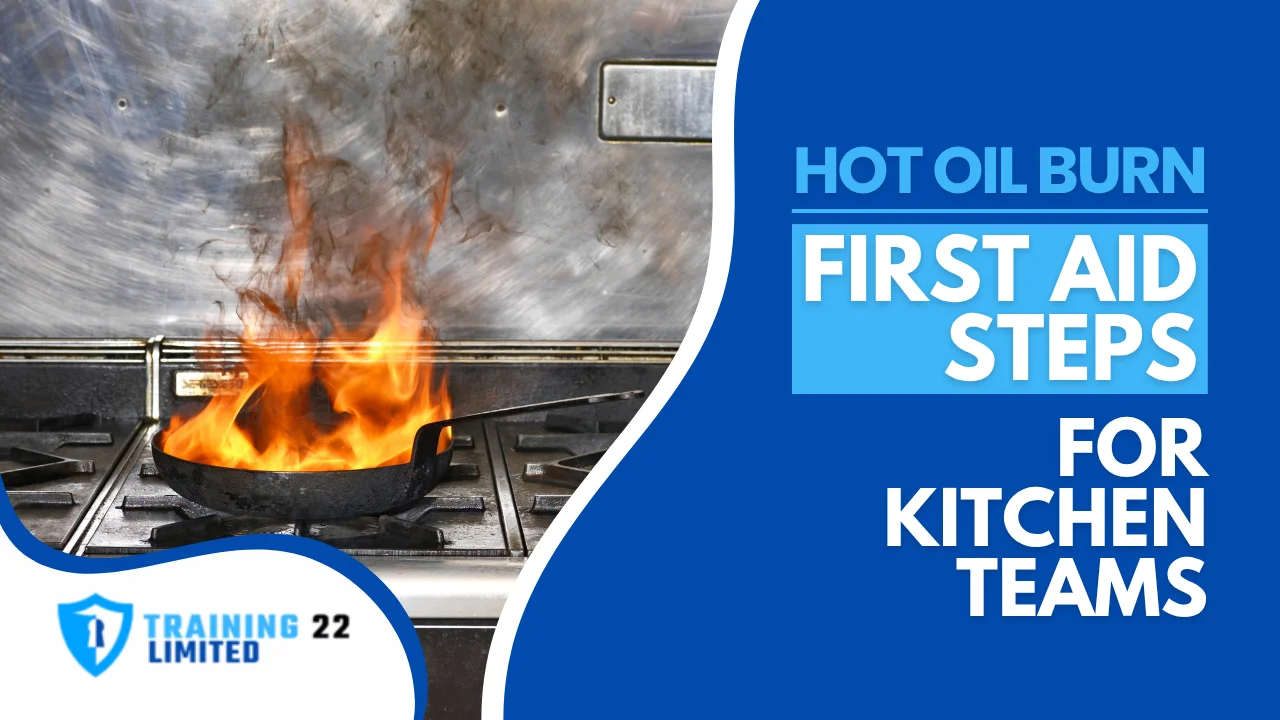
Kitchen environments are fast-paced. Whether in a restaurant, café, takeaway, school kitchen, or workplace canteen, staff often deal with boiling liquids, hot surfaces, and deep fryers. Among these hazards, hot oil burns can happen suddenly and painfully.
A splash of cooking oil can seriously harm skin in seconds. Panic and poor treatment can worsen the injury. That’s why it’s crucial for anyone in or around a kitchen to know the right first aid steps for hot oil burns.
The good news is that quick action can lessen the severity of a burn. Knowing how to respond properly helps reduce pain, tissue damage, infection risks, and improves recovery. It also protects teammates until medical help arrives.
Employers in the UK must promote safe practises and ensure staff are aware of emergency procedures. This includes knowing how to respond to kitchen burn emergencies involving hot oil or grease.
A hot oil burn can turn a regular shift into a stressful situation in seconds. Whether from a splash of frying oil or a deep fryer accident, what happens in the first minutes greatly impacts pain, recovery time, and long-term risks. Understanding hot oil burn first aid helps kitchen teams act quickly, protect the injured, and keep minor incidents from becoming major emergencies.
Why Hot Oil Burns Are More Dangerous Than Many People Realise
Many people don’t realise how serious oil burns can be. Oil gets much hotter than water before it starts to smoke. Cooking oils often reach over 180°C when frying, and oil in deep fryers can get even hotter.
When hot oil contacts the skin, it transfers heat rapidly and continues burning because it sticks to the skin’s surface. This prolonged contact often causes deeper tissue damage than many other kitchen injuries.
Oil burns often happen in high-pressure situations. Workers might instinctively pull back, drop tools, or spill more hot oil, which increases danger for themselves and others nearby.
Understanding how to treat burns from cooking oil is important for both professional chefs and home cooks.
Understanding Different Types of Kitchen Burns
Burn injuries vary. Understanding how serious a burn is helps decide the best way to respond.
Superficial Burns
These burns only affect the top layer of skin.
Common symptoms are:
- Redness
- Mild swelling
- Tenderness
- Pain
Most minor oil splashes cause superficial burns if treated quickly.
Partial Thickness Burns
These burns penetrate deeper skin layers.
Signs may include:
- Blistering
- Intense pain
- Swelling
- Wet or shiny skin appearance
Partial thickness burns often require professional medical assessment.
Full-Thickness Burns
These are serious medical emergencies.
Symptoms include:
- White, black, or charred skin
- Reduced feeling in the area
- Major tissue damage
Get emergency care right away.
Knowing how to assess burn severity is key to responding to kitchen burn emergencies.
The First Critical Minutes: Hot Oil Burn First Aid Steps Everyone Should Know
The moments right after a burn can greatly impact the results.
Step 1: Stop The Burning Process
Move the injured person away from the heat right away.
Turn off cooking equipment if it’s safe. Remove any danger from hot oil, steam, or flames.
Stay calm to avoid more accidents and to respond better.
Step 2: Cool The Burn Under Running Water
One of the key steps for treating a hot oil burn is to cool it. Rinse the burn with cool or lukewarm water for at least 20 minutes. This helps to:
- Lower skin temperature
- Minimise tissue damage
- Relieve pain
- Decrease swelling
Starting the cooling process quickly makes it more effective.
Step 3: Remove Jewellery And Tight Items
Burned areas can swell quickly.
Gently take off:
- Rings
- Watches
- Bracelets
- Tight clothing near the burn
But do not remove clothing that is stuck to the skin.
Step 4: Cover The Burn
Once the cooling is done, cover the injury loosely with:
- Sterile dressing
- Burn dressing
- Clean cling film
This keeps the wound clean and lowers the risk of infection.
Common Mistakes That Can Make Burns Worse
Many old burn remedies are no longer safe or effective. Misinformation can make kitchen accidents worse.
Avoid applying these substances to burns:
- Butter
- Toothpaste
- Oils
- Ice
- Creams
- Lotions
These can keep heat trapped in the skin and cause more damage.
Do not break blisters, as they protect against infection. Knowing what not to do is as important as learning how to care for burns properly.
Deep Fryer Burn First Aid: Responding to Serious Workplace Incidents
Deep fryers can cause serious injuries in the kitchen. Unlike minor splashes from frying pans, deep fryer accidents usually involve:
- A lot of oil
- Higher temperatures
- Larger burn areas
When treating deep fryer burns, focus on safety first. If hot oil spills on the floor:
- Prevent slips and falls
- Turn off equipment if it’s safe to do so
- Keep others away from the danger
Once it’s safe, cool the burn and check how severe it is. If the burn is serious, call emergency services right away.
When Should You Call 999 or Seek Medical Attention?
Not all burns need emergency care, but some do. Get help right away if:
- The burn is bigger than the injured person’s hand
- The face is burned
- Hands, feet, genitals, or joints are burned
- The burn looks deep
- The injured person is a child
- The person shows signs of shock
Call 999 immediately if:
- The person becomes unconscious
- They have trouble breathing
- The burn covers a large area
- There are multiple injuries
Quick action is essential in planning for kitchen burn emergencies.
Managing Shock After a Severe Burn
Burn injuries impact more than just the skin. The body can go into shock from severe pain and trauma.
Look for these warning signs of shock:
- Pale skin
- Fast breathing
- Dizziness
- Weakness
- Confusion
- Cold, clammy skin
If someone shows signs of shock:
- Lay them down.
- Slightly raise their legs if they have no other injuries.
- Keep them warm.
- Reassure them.
- Call emergency services.
Quick action can stabilise the person until help arrives.
Hot Grease Burn Care During Recovery
The first aid response is just the start.
Good aftercare helps healing and prevents problems.
For minor burns:
- Keep the wound clean.
- Change dressings often.
- Watch for signs of infection.
- Follow your doctor’s advice.
Look for symptoms like:
- More redness
- Pus
- Swelling
- Fever
- Increased pain
These may mean an infection, and you should see a doctor.
Taking care of hot grease burns involves managing the wound and preventing more issues.
Building a Safer Kitchen Through Burn Prevention
Knowing first aid for hot oil burns is important, but preventing burns is the main goal.
Kitchen teams can lower risks by:
- Wearing protective clothing
- Using the right gloves
- Not overfilling fryers
- Keeping floors dry
- Following equipment rules
- Staying focused during busy times
Regular safety checks can spot hazards before accidents occur. Prevention and preparedness should go hand in hand.
Why First Aid Training Matters for Kitchen Teams
Accidents can still happen, even with good safety procedures. Quick and correct responses from colleagues can make a big difference between a minor injury and a serious incident.
First aid training helps staff feel confident to:
- Assess emergencies
- Provide immediate care
- Manage burns
- Respond to shock
- Handle emergencies properly
For restaurants, cafés, catering businesses, and food prep workplaces, burn first aid training can enhance safety and fulfil employer duties.
At Training 22, teams can strengthen their emergency response skills through a practical first aid course. This course helps staff gain the confidence to respond effectively in real emergencies.
Creating a Kitchen Culture Where Safety Comes First
Every kitchen team member helps keep the workplace safe.
When workers know how to treat hot oil burns, they can better protect themselves and help their teammates during emergencies.
A culture of safety grows through regular training, clear steps, ongoing discussions, and strong leadership.
Whether you work in a restaurant or cook at home, knowing how to treat cooking oil burns, deep fryer burns, and hot grease burns can be very important when every second counts.
While we can’t predict the next kitchen accident, we can prepare for it. With the right knowledge and training, individuals and teams can respond quickly and effectively to burn emergencies.
Frequently Asked Questions About Hot Oil Burns
How long should I cool a hot oil burn?
Cool the burn under running water for at least 20 minutes. This is a crucial first aid step for hot oil burns and should be done right away.
Can I put ice on a cooking oil burn?
No. Ice can hurt your skin and make the injury worse. Use cool running water instead.
What should I do if hot oil burns through clothing?
Remove any loose clothing near the burn if you can. But don’t pull off clothing that is stuck to the skin.
When should I seek medical help for a burn?
Get medical help for large burns, burns on sensitive areas, deep burns, or any burn that worries you.
Are blistered burns serious?
Blistering usually shows a partial thickness burn. These burns need careful checking and might need medical help.
What is the best way to cover a burn?
After cooling, cover the burn lightly with a sterile dressing or clean cling film to keep it safe from dirt.
Why is deep fryer oil particularly dangerous?
Deep fryer oil gets very hot and can burn you in seconds. That’s why it’s crucial to know how to treat deep fryer burns.
Can kitchen staff benefit from first aid training?
Absolutely. Proper training boosts confidence, enhances emergency response skills, and helps staff provide effective care during workplace incidents.